
Road construction zones are among the most volatile and high-risk work environments on the planet. One minute you’re laying asphalt. The next, a distracted driver or a reversing excavator creates a life-altering scenario.
As we enter 2026, the global push for infrastructure is reaching a fever pitch. In India, we are seeing a record-breaking highway expansion—averaging over 35 km of new roads per day—while in the USA, the focus has shifted to massive rehabilitation projects on aging interstates under the Infrastructure Investment and Jobs Act (IIJA).
Despite the geographic differences, the fundamental truth remains the same: safety standards are the only thing standing between a successful project and a tragic headline.
Strong safety protocols don’t just protect lives; they protect your bottom line, your schedule, and your reputation.
This blog dives into why road construction safety standards are non-negotiable in 2026 and how a “safety-first” culture separates the industry leaders from the rest.
Why Road Construction Safety Is a Growing Concern
The “safety crisis” on our roads isn’t a myth today; it is our reality. In India, the sheer speed of highway development often outpaces the enforcement of safety zones.
With a mix of high-speed cars, overloaded trucks, and two-wheelers weaving through construction diversions, the risk of “secondary accidents” is staggering. A person in India is now statistically far more likely to be involved in a work-zone accident than a decade ago, simply because the volume of active sites has exploded.
In the USA, the challenge is “rehab under traffic.” Most projects involve repairing roads while keeping 100,000+ vehicles moving just a few feet away. Despite strict OSHA regulations, worker fatalities in work zones remain a persistent crisis.
In both nations, a single safety failure leads to more than just a tragic loss; it triggers a domino effect of litigation, insurance premium hikes, and massive project delays.
And in such scenarios, weak road construction safety planning is a financial sinkhole that modern firms can no longer afford to ignore.
Methods and Techniques in Road & Highway Safety That Actually Make a Difference
With unimaginable development happening every-single-where, here are five critical areas where road construction safety standards matter the most.
1. Work Zone Traffic Management

The “transition zone” is where most accidents happen. Effective road construction safety standards like clear lane closures, standardized signage (like the MUTCD in the US or IRC:SP:55 in India), and strategic taper lengths are quite literally important.
In 2026, we’re seeing a shift toward “smart” traffic management by using radar-speed displays and automated flaggers to keep human workers out of the direct line of fire.
A poorly designed diversion isn’t just a nuisance; it’s a trap for unsuspecting motorists.
2. Worker Protection on Active Roadways
Personal Protective Equipment (PPE) is the bare minimum. True road construction safety comes from physical separation.
This means using temporary concrete barriers or “Truck Mounted Attenuators” (TMAs) that act as a shield between live traffic and the crew. Standards now require “buffer spaces” that give errant vehicles room and time to stop before they hit the work area.
When you prioritize the “Safety Gap,” you reduce fatalities, not just minor injuries.
3. Equipment and Machinery Safety
Heavy machinery, loaders, pavers, and rollers are inherently dangerous. “Struck-by” incidents involving reversing vehicles are a top killer on-site.
Modern standards now push for 360-degree camera systems and “Sense-and-Avoid” AI that automatically brakes if a worker enters a blind spot.
Regular safety audits of machinery and mandatory operator certification are no longer “optional” extras; they are the backbone of a high-functioning site.
4. Construction Sequencing and Site Planning
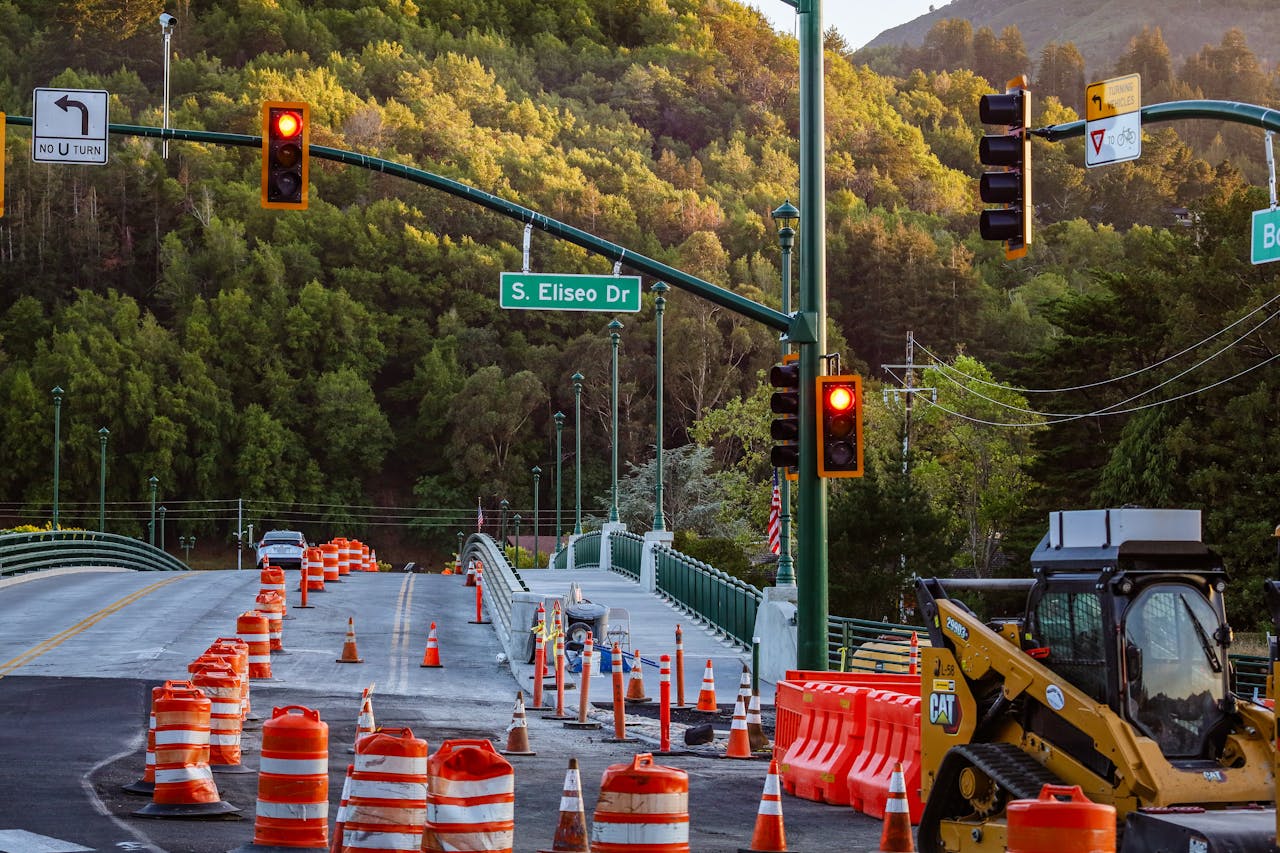
Accidents are often born in the boardroom, not just the field. Poor sequencing, like forcing crews to work at night in high-traffic areas without adequate lighting, increases exposure risk.
A “Safety-First” planning approach evaluates the risk of every phase before the first cone is placed. By optimizing the schedule to reduce “worker exposure hours,” you naturally lower the probability of an incident occurring.
5. Emergency Response and Incident Preparedness
When things go wrong, every second counts. Standards now require “Incident Response Plans” that are more than just paperwork. This involves pre-coordinated routes for emergency vehicles and having trauma-trained safety officers on-site.
In India’s rural highway projects or the US’s remote mountain passes, being 20 minutes away from a hospital means your on-site “Golden Hour” response is the difference between life and death.
Build Safer Roads with MMCPL
At the end of the day, road construction safety isn’t about slogans or wearing a yellow vest; it’s about a rigorous, systemic commitment to excellence.
Whether you are operating in the high-density expressway corridors of India or the high-speed interstates of the USA, the data is clear: the safest projects are also the most efficient and cost-effective.
This is where MMCPL becomes your strategic partner. We don’t just follow road construction safety standards—we set them. From AI-driven work zone monitoring to high-performance traffic management, MMCPL is the go-to solution for developers and government bodies involved in planning road and highway infrastructure.
When you build with us, you aren’t just building for today; you’re engineering a safer, more sustainable future for every citizen who takes the road.
