
In 1993, Milwaukee learned the hard way that water infrastructure is inseparable from public health.
If there’s one thing shaping infrastructure today, it’s the race toward net zero. Governments are building roads, ports, and cities at a record pace, but they’re also under growing pressure to cut emissions.
However, the answer isn’t to build less. It’s to build smarter.
Today, across the world, we’re seeing a new wave of green infrastructure and renewable energy projects—where solar, wind, and smart grids are designed into infrastructure from the start, not bolted on later.
The good news is, these projects are more resilient, more efficient, and often cheaper to maintain in the long run.
So, let’s look at what this integration really means, why it matters, and how global planners, including teams like MMCPL, are helping shape infrastructure that doesn’t just serve people, but also powers itself.
The New Meaning of Green Infrastructure and Renewable Energy
A decade ago, calling a building or bridge “green” usually meant installing a few solar panels or using recycled materials.
Today, the definition of green infrastructure is far broader and far more exciting.
The integration of modern infrastructure with renewable power sources means structures don’t just use energy efficiently, but also create it.
Imagine airports that use geothermal loops to regulate temperature, roads lined with solar panels powering their own lighting, or buildings that generate more electricity than they consume. This is what modern green infrastructure looks like!
For instance, in the Netherlands, you see noise barriers built with solar cells along certain highways. They block sound and feed power back into the grid. And in India, solar rooftops are now being installed over national highways to run toll plazas and nearby facilities.
These examples show what “integration” looks like when it’s planned from the blueprint stage.
The best part is, the benefits go beyond sustainability slogans. These systems cut operational costs, improve energy reliability, and reduce dependence on traditional grids.
Moreover, they also make infrastructure stronger and better that are able to handle the climate extremes we’re already seeing more often.
Key Challenges in Integrating Green Infrastructure and Renewable Energy
Now, green infrastructure may sound ideal but bringing renewable energy into core infrastructure comes with serious challenges.
First and foremost, grids are not always ready. Solar and wind power are intermittent, meaning energy supply doesn’t always match demand. Balancing that requires coordination between civil engineers, power companies, and urban planners. And that’s still a work in progress in many countries.
Then there’s the red tape. Renewable integration crosses multiple departments of energy, environment, and urban development. In such situations, different approval processes can pause projects that are otherwise ready to go.
Cost, unsurprisingly, is a major concern. Even though renewable energy prices have dropped dramatically, the upfront setup for smart systems, including batteries, controls, and monitoring, can still intimidate investors. Having said that, over a 20-year span, most of these systems pay back through lower bills and reduced maintenance.
Finally, design coordination is another underestimated issue. Civil and electrical systems are often developed in isolation. If teams don’t work together early, you end up with misaligned layouts or underused assets.
But when integration is well managed, as seen in new U.S. industrial microgrid parks and European smart city zones, the outcome is both profitable and sustainable.
Smart Strategies for Integrating Renewable Energy into Infrastructure
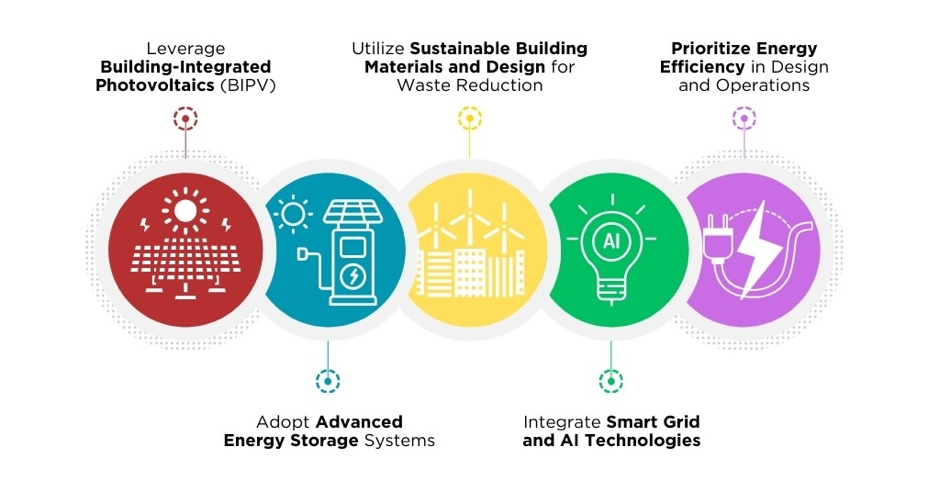
So, what’s actually working when it comes to green infrastructure and renewable energy?
Around the world, a few innovative strategies are proving that green infrastructure and renewable energy can indeed go hand in hand.
- Co-Location and Hybrid Models
Why build separate energy plants when existing spaces can do the job? Solar rooftops over highways, railway stations, and airports are turning passive land into productive energy zones. India and Japan have both experimented with solar canopies on roads that charge EVs and light nearby facilities.
- Microgrids and Local Storage
Industrial estates and ports are now installing local power systems that run independently of the main grid. When the grid goes down, microgrids powered by solar, wind, or bioenergy keep operations running. California’s port microgrids are great examples of how this adds resilience.
- Smart Grids and Real-Time Controls
AI-driven systems can forecast weather, anticipate power demand, and adjust supply automatically. Smart grids are like living networks – they shift power dynamically to prevent overload or blackouts.
- Sector Coupling: Linking Energy, Water, and Waste
Moreover, some of the most innovative cities are successfully interlinking their energy and waste systems while innovating fast in municipal water treatment processes. For instance, wastewater plants in Denmark and Singapore generate biogas to feed local grids. This is true circular design in action—turning waste into power.
- Nature-Based Design
The next generation of green infrastructure and renewable energy projects doesn’t separate ecology from engineering. Green roofs with solar panels, shaded walkways that double as PV arrays, and wetlands that filter runoff—all show that climate adaptation and energy production can coexist beautifully.
- Public-Private Collaboration and Green Finance
None of this works without financing. Governments are increasingly working with private developers through ESG funding, PPPs, and green bonds. This is how large-scale transformation happens by combining capital with commitment.
For a closer look at sustainability in action, check out MMCPL’s take on Engineering and Sustainability: A Fresh Perspective.
The Future of Green Infrastructure and Renewable Energy
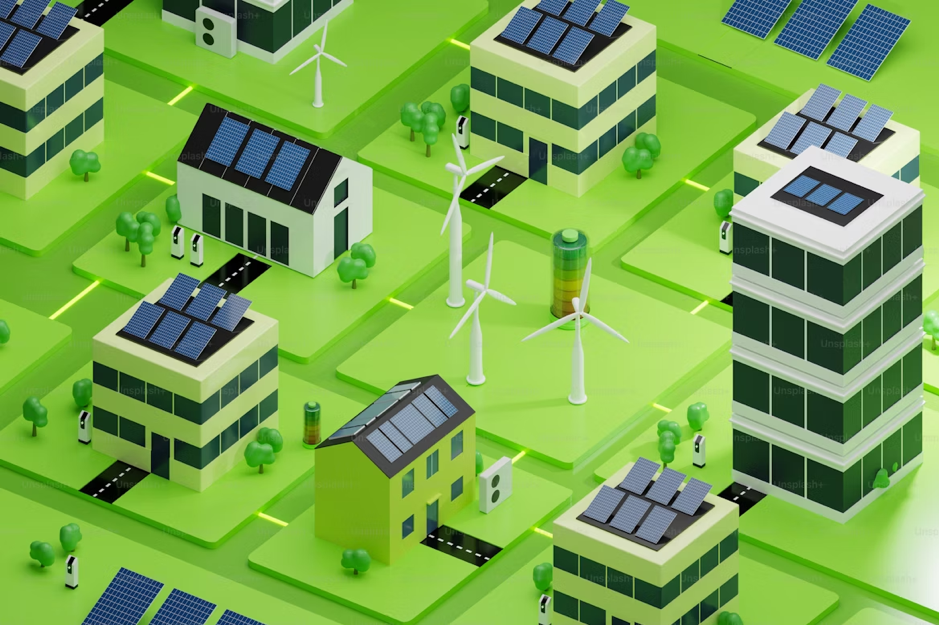
If we peek just a few years ahead, it’s clear that green infrastructure and renewable energy will be inseparable. The future will be defined by energy-positive systems and projects that generate more power than they use.
Hydrogen-ready pipelines, EV-charging highways, and urban energy networks where buildings share renewable power are already being tested in places like Europe and South Korea. These models prove that infrastructure can evolve beyond functionality by becoming part of the energy system itself.
We’re also moving toward fully circular designs, where the waste from one process fuels another. Data centers are reusing heat for nearby housing, while solar-integrated bridges are powering their own sensors and lighting.
In short, integration isn’t a trend anymore; it’s the next standard of responsible design.
You can read more about the global shift towards smart energy systems on Infrastructure Development Trends Reshaping Urban Life.
Partnering with MMCPL to Build the Next Generation of Infrastructure
At MMCPL, we’ve seen firsthand how early-stage planning changes everything. The key isn’t to add renewable systems as an afterthought; it’s to build them into the DNA of all our projects.
Our engineers and planners design with one question in mind: How can this structure contribute to its own sustainability? Whether it’s energy-efficient water systems, smart industrial parks, or renewable-ready roads, we focus on solutions that serve people today and protect resources for tomorrow.
Because, truth be told, the future of infrastructure isn’t about how fast we can build, it’s about how wisely we do it. And that wisdom starts with blending innovation, sustainability, and purpose.
