
It’s a sobering fact that agriculture uses about 70 percent of the world’s freshwater, and yet most of it never reaches a plant’s roots.
There are many reasons, including cracked canals and inefficient flood irrigation, due to which billions of litres evaporate before they can do any good.
However, there are a handful of successful irrigation systems that have proved that water can feed more people with far less waste.
These systems work all over the world—stretching from Israel’s Negev desert to California’s Central Valley while balancing technology, governance, and community participation to turn scarcity into security.
In this article, we will be covering the main factors that drive the impact of successful irrigation systems while looking at what makes them work—including design choices, management habits, and other innovations that keep water flowing, farms profitable, and ecosystems intact.
First, let’s have a look at why we really need successful irrigation systems in the world.
The Importance of Irrigation Systems in Global Agriculture
Irrigation may cover only one-fifth of the world’s cropland, but it supplies roughly 40 percent of total food production. And that’s the reason why successful irrigation systems are the quiet backbone of global food security.
Where rainfall is unpredictable, irrigation stabilises incomes and keeps rural economies alive.
Think of California’s Central Valley, where carefully managed canals and aquifers support a $20 billion farm economy, or Punjab in India, where controlled water delivery helped transform wheat output during the Green Revolution.
Successful irrigation systems don’t just produce crops, but they cushion nations against drought and food inflation.
However, success is never just about digging canals or laying drip lines; it’s about consistency and perfection in network designs, local governance, water resource management, infrastructure maintenance and a gazillion other details.
So what are the key factors that influence the impact of an irrigation system? Here’s what’s working in irrigation systems across the globe:
1. Efficient Water Use and Distribution
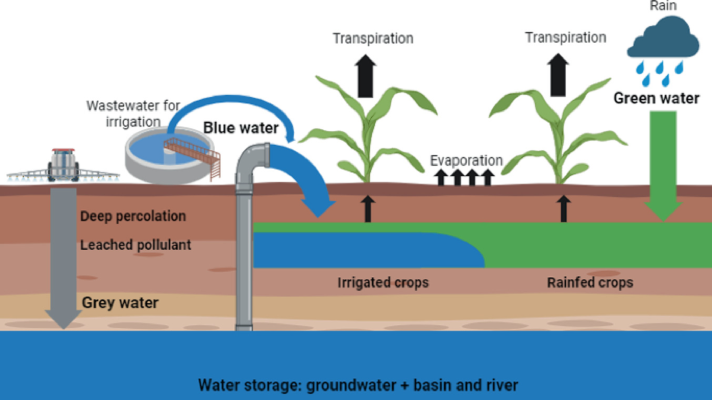
Image source: https://link.springer.com/chapter/10.1007/978-3-031-67739-7_20
The first ingredient of any lasting system is simple: not wasting water. Countries such as Israel and Spain pioneered micro and drip irrigation networks that deliver moisture directly to roots, cutting evaporation losses by up to 40 percent. In both places, every drop is metered and recycled.
Moreover, real-time flow monitoring now ensures equity across entire districts. Decision makers can see data on shared dashboards so that there are no disputes over “who got more,” as numbers speak louder than guesses.
2. Technological Integration and Smart Control Systems
Today, modern irrigation has gone digital. In the U.S. and Australia, they have sensors buried in fields that read soil-moisture levels every few minutes, while satellites scan crop stress from orbit.
And based on these data, algorithms then schedule water delivery automatically so that there’s no over-watering and guesswork.
The good part is, precision in irrigation not only saves water, but also energy and fertilizers. California’s almond growers now pair IoT probes with weather forecasts to irrigate only when evapotranspiration is high, resulting in higher yields and lower groundwater drawdown.
In all of these cases, technology plays the role of providing data so that managers can act rationally and fix policy gaps!
3. Institutional and Governance Strength
A canal without governance is just concrete. The world’s most successful irrigation systems share one trait in common: shared responsibility.
One popular example of this is when Mexico’s transfer of canal management to local Water User Associations in the 1990s turned failing systems into self-sustaining ones. In India’s Maharashtra state, participatory irrigation management committees now handle scheduling, fee collection, and minor repairs.
So, it’s very clear that when farmers and locals have a say, maintenance becomes better with minimal corruption.
Transparent institutions also mediate conflicts, keeping communities invested rather than divided.
In short, it’s governance, not gadgets, that keeps water politics from boiling over.
4. Financial Viability and Policy Support
Even the best engineering can collapse without financing. And thus, governments that treat irrigation as a social investment, not just a subsidy, tend to see the highest returns.
For example, subsidies aimed at efficiency (for example, drip-kit incentives in India’s Per Drop More Crop scheme) encourage adoption of smarter systems.
Besides government support, public-private partnerships are emerging too. In Morocco and Egypt, private firms co-finance pump modernisation in exchange for long-term service contracts.
Other than that, stable policy frameworks give lenders confidence, and farmers can then upgrade pumps or pipelines without fearing mid-project rule changes.
So, it’s money, predictability, and good design that keep water infrastructure alive long after ribbon-cuttings.
5. Sustainability and Environmental Compatibility
Lastly, no irrigation system succeeds if it drains its own future. That’s why recharge ponds, treated-wastewater reuse, and solar-powered pumps are reshaping the sector.
In sub-Saharan Africa, solar mini-grids now power thousands of borehole pumps, freeing farmers from diesel costs and emissions. South Asia’s shift toward solar irrigation has lowered both bills and carbon footprints while improving reliability during erratic grid supply. This is the future of rural infrastructure development unfolding before our eyes.
Meanwhile, circular-water pilots in Spain and Singapore are proving that treated effluent can safely re-enter farm cycles.
All of these clearly show that sustainability isn’t an add-on to engineering anymore; it’s becoming more of an operating principle with every passing day.
Building Future-Ready and Successful Irrigation Systems with MMCPL
The way innovations are happening left right and center in the field of water supply management, it’s very certain that the next wave of successful irrigation systems will think in loops, not lines.
At MMCPL, our approach blends planning, engineering, and data analytics to design lasting systems—ones where every pipe, pond, and pump works as part of a living network.
We see irrigation not just as an infrastructure service, but as a lifeline for communities and ecosystems alike.
Going forward, the success of irrigation won’t be measured only in hectares irrigated or megawatts pumped. Its true wins will lie in how fairly, efficiently, and sustainably it delivers water and prosperity to those who need it most.
