
In 1993, Milwaukee learned the hard way that water infrastructure is inseparable from public health.
When the U.S. Congress passed the Infrastructure Investment and Jobs Act, more than what it appeared on the surface, it was a bet that better bridges, ports, and broadband would pay for themselves through growth.
India’s Gati Shakti platform runs on the same logic—connecting supply chains and smoothing out transport and logistics means that the economy starts breathing easier.
That’s really what this whole conversation is about: infrastructure and economy moving in sync. Every new mile of road or megawatt of clean power quietly shapes productivity, trade, and opportunity.
Let’s quickly have a look at how infrastructure and economic development are connected, why it sometimes breaks down, and what smarter urban, rural and industrial planning can do to keep the relationship healthy.
How Infrastructure Drives Economic Growth
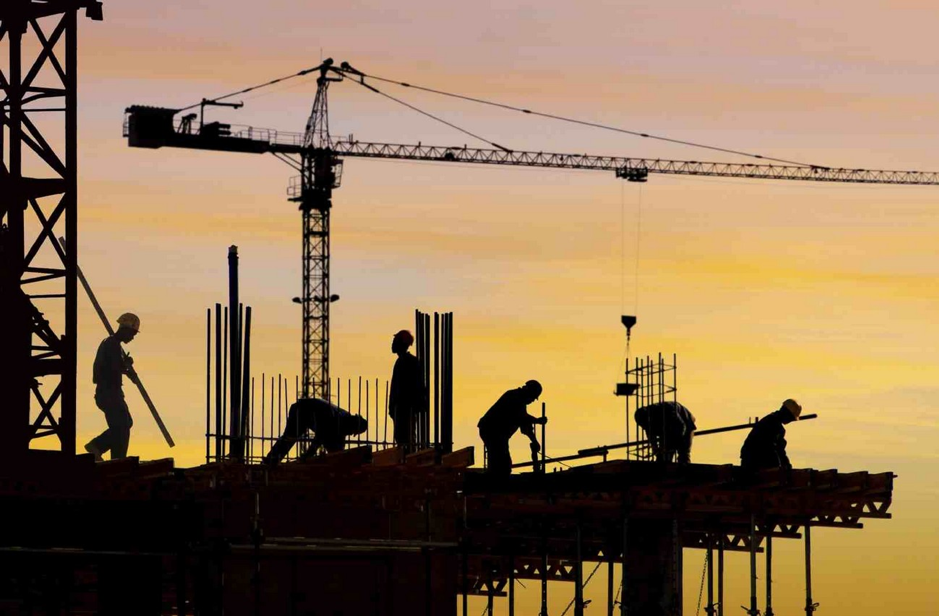
There’s no doubt that infrastructure is the endoskeleton of development—roads, grids, water systems, and digital networks keep GDPs of nations growing. Even if one part is missing, the system won’t work.
To give you an example, the interstate system in the United States didn’t just connect cities; it built suburbs, trucking companies, and motels along the freeways. This led to the economy being a part of the very culture of the country.
Infrastructure isn’t a background expense—it’s the stage on which every other form of growth performs. Here are some direct ways in which infrastructure impacts economic development:
Connectivity and trade: When ports run smoothly and highways cut hours off travel time, goods get cheaper and regions link into global markets. Kenya’s Mombasa–Nairobi corridor turned an eight-hour truck route into five and cut shipping costs by a third.
Jobs and local multipliers: Building infrastructure creates immediate large-scale employment. And the story doesn’t end there. More businesses pop up around it—fuel stops, restaurants, warehouses, and markets. Remember, each new road has a ripple-out value that few balance sheets capture.
Productivity and innovation: Reliable power and broadband do for ideas what roads do for goods. Think of how digital backbones have helped startups scale globally.
Private investment magnet: Lastly, investors follow infrastructure. When a region signals reliability with steady power and solid logistics, capital shows up. That’s the same reason why manufacturing parks cluster around expressways from Texas, USA to Gujarat, India.
Challenges Limiting the Impact of Infrastructure on the Economy
Now, here’s the uncomfortable part. There are some hurdles that lessen the impact of signature infrastructure and how it can contribute to wider aspects of the economy.
What are these obstacles?
Poor Planning
When projects get chosen for political reasons rather than economic ones, they usually end up half-used. There can be no better example of this than China’s ghost cities.
Neglecting Maintenance
Building new infrastructure is exciting, but fixing old infrastructure isn’t. Yet in the U.S., deferred bridge repairs now cost more than building new ones ever did, which could’ve been fixed by simply maintaining what has been built.
Environmental and Social Trade-Offs
If a flood wipes out a road every monsoon, what did that “investment” really buy? So, it’s important that there’s resilience in the design, not just beside it.
Financing Friction
It’s very common for budgets to stretch thin, loans to take months, and inflation to eat the promised ROI, which slows down and discourages great infrastructure from being built.
All of these prove that infrastructure for economic development mainly fails due to weak coordination rather than bad technology.
How to Maximize the Impact of Public Infrastructure on the Economy
So, how do you fix the loop? By making sure infrastructure keeps paying the economy back! Here are a few stand-out strategies that have been tested around the world:
- Beginning with the end in mind
Not every kilometer is equal. Focus spending on corridors that unlock trade or productivity. Kenya’s rural road upgrades did more for increasing and sustaining farmers’ incomes than many subsidy programs.
- Data driven planning
Satellite imagery, GIS layers, and predictive models now tell planners exactly where a bridge or grid delivers the highest return because guesswork has no place in billion-dollar budgets.
- Public-Private Partnerships (PPP)
Public-private partnerships work when risk is shared fairly. The U.S. toll-road system and Europe’s renewable parks show how private capital can stretch public ambition.
- Sustainability and resilience
Resilient, green materials cost more upfront but last longer and save fortunes later. Flood-proof culverts and renewable-powered facilities aren’t luxuries; they’re insurance.
- Inclusive infrastructure development
A road that ends 10 kilometers before a rural village isn’t a beacon of infrastructure. The U.S. broadband expansion and India’s village electrification programs both prove that connecting the “last mile” pays social and economic dividends for decades.
When you do all this, growth stops being a short-term spike; it becomes a habit.
The Future Outlook for Infrastructure and Economy
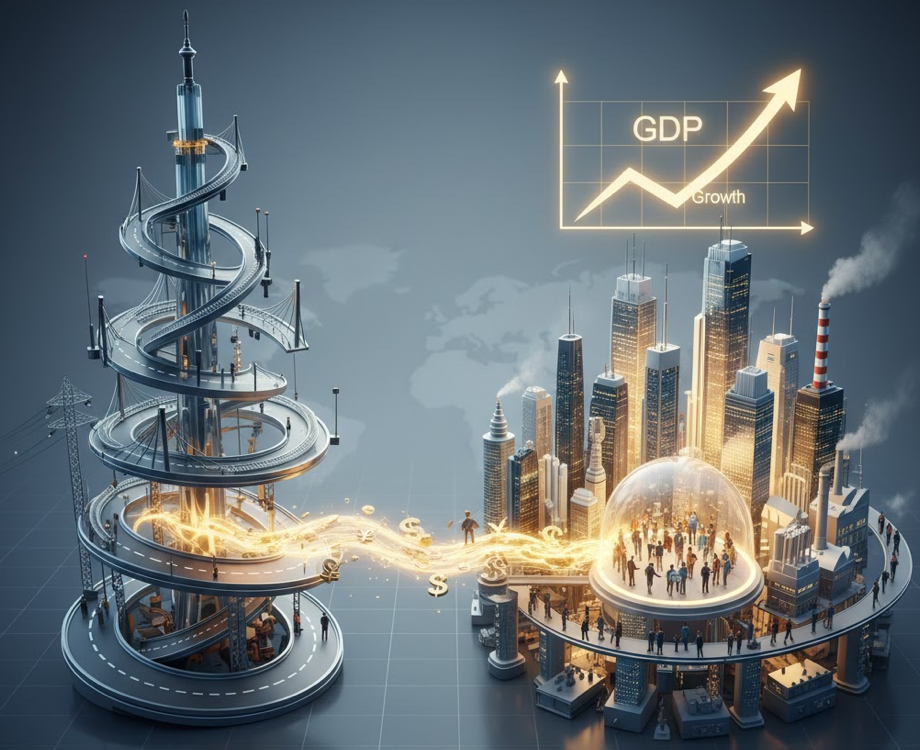
The future of infrastructure for economic development won’t be written in cement alone. We would also need digital networks, renewable energy corridors, and smart-city logistics to set the right standards.
Europe’s Global Gateway initiative and India’s solar industrial corridors point to a new model: infrastructure that earns its keep by being sustainable. Power grids will talk to factories, roads will carry sensors as well as cars, and data will move faster than trucks ever could.
We need to keep in mind that economic strength will come not from how much we build, but from how intelligently we connect it all.
Build Economies Through Smarter Infrastructure with MMCPL
Every economy that grew strong did so on a foundation of good infrastructure and kept reinforcing it generation after generation.
At MMCPL, we treat planning as economic design. A bridge, a port, a water network—these are not disjointed infrastructure projects; they’re catalysts to prosperity. Our teams combine engineering depth with a clear understanding of fiscal and social impact so that every project we touch contributes something lasting to the economy around it.
Because in the end, the link between infrastructure and economy isn’t theoretical. It’s visible in every connected farm, every always-on factory, and every young worker who can now do a job at a place they could never reach before.
