
Cities aren’t growing the way they used to. Instead of spreading outward endlessly, the world’s fastest-growing cities are now reshaping themselves internally, layer by layer, using the latest combination of data, engineering, urban planning and design.
This new shift is what is known as smart city engineering. It’s not another technical fad but a structural change in how cities operate, respond, and evolve.
Whether it’s a transport corridor in Singapore or a revamped utility network in Pune, smart city systems are being built from the engineering core outward.
We at MMCPL, with our cross-sector planning and design experience, have already seen this shift happening across multiple urban projects. This new approach is clearly reflected in urban and rural planning and how cities can rethink layouts, infrastructure, and services from the ground up.
In one of our recent articles, we discussed that the pressure on cities today comes from mobility demands, climate unpredictability, and economic competition. And smart city engineering is meant to solve these exact challenges while making cities future-proof themselves.
But what exactly do we mean by smart city engineering?
What Smart City Engineering Really Means
When people hear the term “smart city,” they imagine sensors, apps, or futuristic screens. But engineers know they were only scratching the surface so far.
The real work, the part that makes a city “smart,” is the one that happens inside its infrastructure.

To give you an example, smart city engineering means building systems that communicate with each other. Roads that regulate traffic density and flow, water networks that detect leaks, grids that automatically balance loads, and waste systems that optimize routes based on volume.
In other words, a smart city is a shift from reactive city management to predictive, data-driven operations.
To get an idea of how smart city engineering looks in real life, it’s good to have a look at cities like Singapore and Barcelona, as they have done this well.
Singapore’s Smart Nation strategy connects mobility, energy, and public services under one digital ecosystem. While Barcelona integrates utilities, lighting, waste collection, and water networks into one responsive grid.
In one of our articles, we have talked about innovations in municipal water treatment systems and how water infrastructure becomes “smart” when combined with sensors, SCADA, and GIS planning, which are key components of modern city engineering.
Why Smart City Engineering Is Becoming a Global Urban Priority
The conversation around “smart cities” is becoming increasingly commonplace in municipalities and governments across the world. Not a surprise considering the strong link between infrastructure development and economic progress.
Here are some factors propagating this focus on smart cities:
-
Exploding Urban Populations, Shrinking Budgets
With every passing year, cities are adding millions of new residents annually, but we all know that public budgets rarely grow at the same pace. In such cases, smart engineering helps cities do more with less with optimized energy use, reduced waste, and extended lifespan of assets.
-
Climate Stress and Infrastructure Fragility
If we look around, heatwaves, extreme rainfall, water scarcity, and coastal flooding are now routine. And to overcome these challenges, cities now need climate-responsive engineering with robust drainage, heat-resistant pavements, smart and renewable energy sources, and early-warning systems for disaster management.
-
Economic Competitiveness
Another big reason why global authorities are focusing on smart city engineering is that modern infrastructure attracts better businesses, talent, and investment. Dubai, Seoul and Tel Aviv have shown us that engineering-led smart cities become high-productivity hubs that empower the whole country when it comes to economic aspects.
Now that you have got an idea of why governments are focusing on smart city engineering, let’s have a look at what it is made of and its foundations.
The Foundations of Smart City Engineering
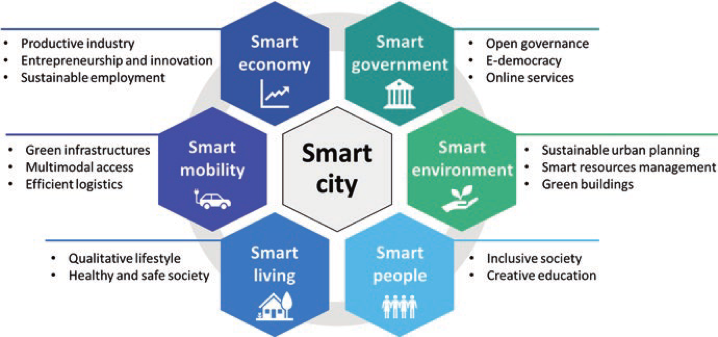
To talk about smart city engineering, it’s very important to note that it focuses on redesigning infrastructure with intelligence at the center. Here are five pillars that define the foundation of smart city engineering.
-
Digital Infrastructure & Data Ecosystems
Smart cities are defined by how well the infrastructure of real-time dashboards, IoT networks, open data layers, and integrated communication systems has been built. This allows decision-makers to see the city “live” by looking at how traffic is flowing, how water is being consumed, and how energy demand shifts through the day.
New York’s LinkNYC network and Tokyo’s integrated sensor grids are great examples of these!
-
Smart Mobility Engineering
The fastest way to make people experience a smart city is through smart mobility. This means having adaptive signals, connected intersections, EV-ready corridors, and integrated transit hubs that drive efficiency.
Singapore’s GLIDE system coordinates traffic flow across the city, and Los Angeles uses ITS technology with real-time analytics to reduce peak-hour delays—demonstrating smart mobility engineering in real life.
-
Sustainable & Resilient Urban Utilities
No city can be “smart” without rethinking water, power, and efficient public health systems. For this, cities need to implement smart metering, SCADA-based operations, water recycling plants, distributed renewable grids, and more.
Our recent blog post on innovations in municipal water treatment systems describes exactly the type of foundational utility engineering needed for smart cities.
-
Climate-Responsive Infrastructure Design
Smart cities also make cities climate-resilient. Engineering teams now design permeable roads, green corridors, flood-proof drainage, and heat-optimized materials using GIS-based risk mapping.
MMCPL’s flood risk management analysis highlights how engineering models predict and prevent city-wide disruptions.
-
Smart Governance & Community Systems
Last but not least, the governance layer often defines whether a smart city thrives or stagnates. Factors like digital permitting, e-governance platforms, participatory planning, and streamlined urban data systems help cities make decisions faster and more transparently.
Estonia’s fully digital citizen platform and Dubai’s paperless government are global examples of this.
Technologies Powering the Future of Smart City Engineering

Without powerful technologies, the next leap in smart city engineering is not possible! For smart cities to become a reality, we need technologies that merge physical infrastructure with digital intelligence. Below are some of those technologies that enable our dream of smart cities:
- Digital twins simulate entire neighborhoods, drainage networks, or transport systems and predict failures before they happen.
- AI-driven mobility modelling helps cities plan signal timing, road expansions, and public transit routes with far greater accuracy.
- Remote sensing and IoT enable utilities to run preventive maintenance instead of emergency repairs.
- GIS-driven master planning helps cities integrate land use, transport, ecology, and utilities in a single cohesive framework.
Challenges Cities Face While Implementing Smart City Engineering
While there’s huge potential and public benefit in utilizing smart city engineering, there are an equal number of hurdles too:
- Fragmented governance slows execution, especially where utilities, transport, and housing are managed by different departments.
- Legacy infrastructure often resists digital retrofitting.
- High initial capital requirements can intimidate decision-makers, even though lifecycle costs are lower.
- Data privacy and cyber-resilience become unavoidable concerns.
- Skill gaps persist, particularly in smaller municipalities.
This is where multidisciplinary firms like MMCPL offer real value by coordinating planning, engineering, digital modelling, and implementation – all under one framework.
How MMCPL Helps Cities Build Smarter, Safer, More Resilient Systems
For MMCPL, smart city engineering is about using data to design cities that work better, last longer, and adapt faster. Our approach combines master planning, engineering design, environmental analysis, due diligence and quality assurance, and digital tools to help governments and developers build systems that scale.
Cities that rethink their engineering today will become the thriving, resilient, economically competitive cities of tomorrow.
MMCPL partners with municipalities, planners, and developers to turn smart city ideas into practical, long-term infrastructure solutions.
If your city or organization is planning its next leap forward, MMCPL’s integrated engineering and project management expertise can help build systems that stay resilient, sustainable, and citizen-centric.
