
Today, in urban areas, clean water isn’t just about infrastructure; it’s also about innovation.
Major cities everywhere are grappling with swelling populations, erratic climate patterns, and rising water demand that their systems simply weren’t designed to handle.
We’re seeing this play out not just in older towns and municipalities but also in smaller ones that are expanding faster than their infrastructure can adapt. It’s a public health engineering nightmare.
Though traditional fixes are struggling to keep up, that’s not the end of the story. The real growth is in how technology is stepping in to rewrite these rules.
Municipal water treatment systems are evolving and not in small, incremental ways. Today’s solutions are smarter, faster, and more sustainable. And at MMCPL, we’ve been watching and contributing to this shift from the ground up.
In this blog, we will cover the top 10 most important water treatment innovations shaping 2025 and beyond. But before that, let’s understand the importance of innovation in municipal water treatment systems.
Why Innovation Matters in Municipal Water Treatment Systems?
Many cities still rely on systems built decades ago; systems that weren’t designed for today’s volume, contaminants, or urgency. Infrastructure is ageing, and in some cases, failing quietly.
Then there’s the pollution challenge. Industrial zones, agricultural runoff, and even residential waste introduce new and complex contaminants. Add to that energy costs and increasing water losses, and it becomes clear that patchwork fixes won’t cut it anymore.
Keeping all of these in mind, we don’t just need upgrades, we need a whole new way of looking at water supply management for towns and cities. Innovations that are scalable, sustainable, and rooted in today’s realities and not in yesterday’s assumptions.
Now that you have got clarity about why innovation is important in the municipal water treatment system, let’s have a look at some advanced technologies that are shaping the future of water treatment systems.
1. Water Quality Monitoring with Smart Sensors
Instead of waiting for lab results or acting only after people start complaining, smart sensors give us eyes on the system 24/7. They track everything from chlorine and pH to flow rates and turbidity, and they do it in real time.
This kind of visibility helps utilities move from reactive to proactive. At MMCPL, we’ve seen how predictive alerts can prevent plant downtime or contamination issues before they happen.
A few Indian municipalities have even started using mobile alerts triggered by threshold breaches. And it’s already changing how operators respond.
2. Membrane Technology (Reverse Osmosis, UF)
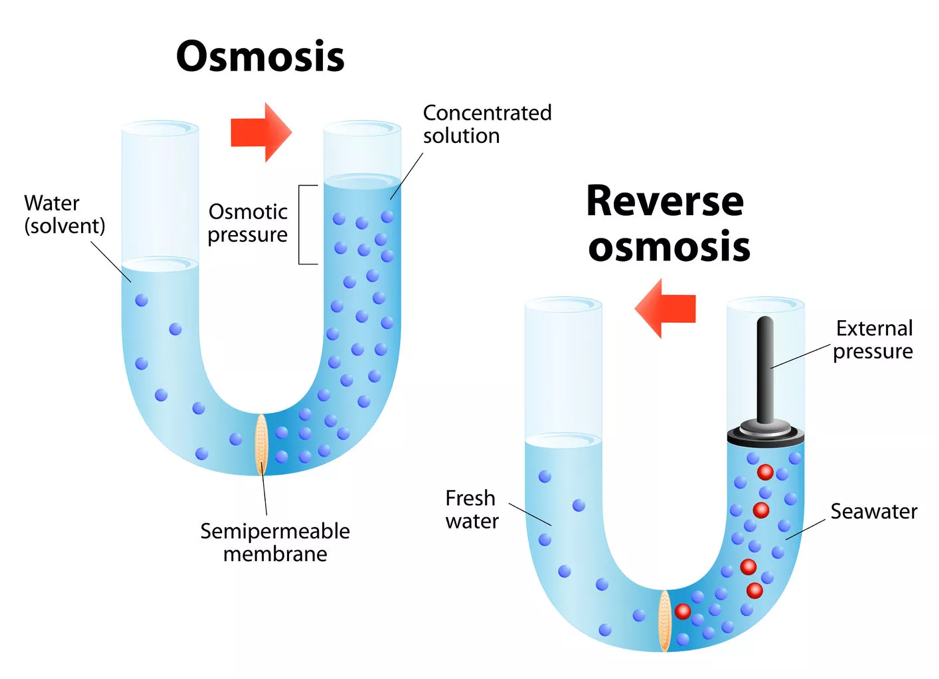
Membrane filtration has been around for a while, but its newer forms, like ultrafiltration (UF) and high-efficiency RO, are making it more practical for urban settings.
They’re compact, easy to automate, and incredibly effective at removing fine particles, pathogens, and dissolved solids. Plus, it is possible to integrate membrane units in dense areas where space is limited but water demand is high, and the results are promising.
3. Carbon-Based Purification (Activated Carbon, Graphene)
There’s something satisfying about simple, powerful materials doing complex jobs. Activated carbon has been a staple, but newer carbon forms like graphene-enhanced filters are showing even stronger chemical absorption.
Especially in mixed-use zones where industrial and residential areas come together, these systems help reduce chlorine taste, odours, and volatile organic compounds that old-school filters often miss.
4. Advanced Disinfection Solutions (UV-C, Ozone)
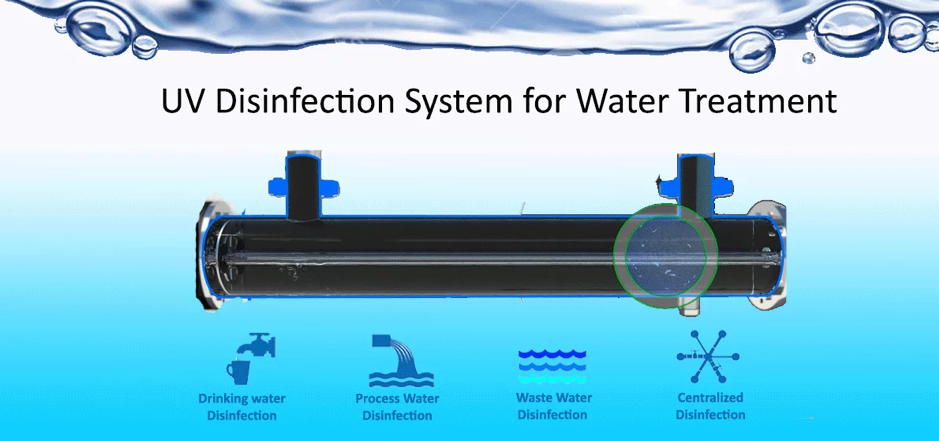
Moving next, when we talk about disinfection, it generally includes chemical disinfectants, such as chlorine. And we all know that they come with trade-offs, especially with by-products.
Now, UV-C systems and ozone-based disinfection are stepping in with clean, non-chemical ways to kill pathogens. These are scalable, environmentally friendly, and safer to manage. We’ve noticed more municipal RFPs are asking for these alternatives outright recently.
5. Desalination Technology
This used to be something only coastal megacities could afford. However, with falling energy costs and improved tech, desalination is starting to look like a feasible part of municipal water treatment systems even in mid-tier coastal towns.
Low-pressure reverse osmosis and solar-powered desalination plants are already in operation in Florida, California and Texas in the US and in pilot stages in Gujarat and Tamil Nadu in India. They’re not perfect yet, but they’re not far off either.
6. Modular Water Treatment Systems

A modular water treatment system is like “plug-and-play” but for infrastructure. They can be delivered, assembled, and fully operational in a matter of weeks.
These systems have been a game-changer for towns under sudden expansion or in emergency situations like post-flood rehabilitation.
Some setups even allow remote monitoring and automation, which is great for local bodies with limited manpower.
7. Bio-based Water Remediation (Algae, Bacteria Enzymes)
Nature has always had solutions, it’s just that we’re finally starting to use them at scale. Algae and bacteria enzyme-based treatments are now being explored to break down organic matter in wastewater naturally.
You can also use algae to treat low-flow sewage water with almost no energy input. Sludge volume dropped, and the community saved significantly on disposal. These methods won’t replace traditional plants yet, but they’re brilliant as supplementary systems.
8. Nanofiltration Systems
Some contaminants, like pharmaceutical residue or certain pesticides, are too fine for standard filters but too common to ignore. In such situations, nanofiltration hits that middle ground.
It’s more selective than conventional membranes and requires less pressure than RO, making it energy-efficient. Cities with high industrial influence are showing keen interest, especially in upgrading water safety post-treatment.
9. Industrial IoT and Automation
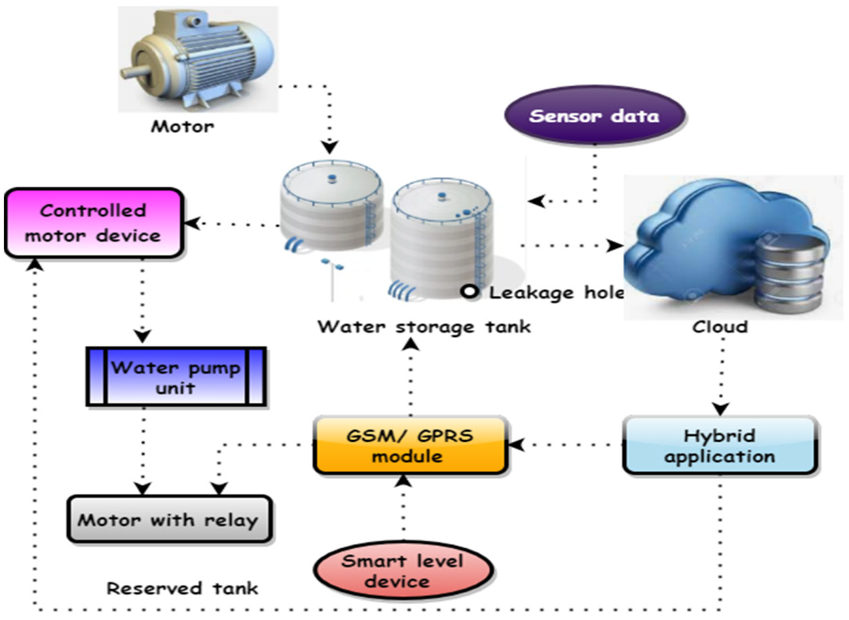
What used to need a full control room can now be managed with a tablet. Municipal water treatment systems powered by IoT use sensors, automation, and cloud-based dashboards that can now streamline the whole operation.
With industrial IoT and automation, you get remote control of dosing, early alerts, and centralised data—everything a growing city needs to maintain water quality without multiplying labour costs.
10. Energy-Efficient Integrations (Solar Power, Heat Recovery)
Lastly, the big one: sustainability.
Solar-powered pumps, energy recovery loops, and low-energy aeration systems are no longer just nice-to-haves when it comes to municipal water treatment systems. They’re becoming standard in newer plants across Asia, including India. The shift is happening quietly and steadily.
Some plants are even running near net-zero in terms of energy input. It’s the kind of change we need to see more of—both for budgets and the planet.
Implement The Latest Innovations in Municipal Water Treatment Systems with MMCPL
At MMCPL, we don’t just follow water treatment trends—we actually work to embed them into real projects, from small-town upgrades to full-scale smart cities. And we know that future-ready municipal water treatment systems aren’t built with yesterday’s tools.
They’re built with a balance of proven science, scalable innovation, and design that respects both urgency and longevity.
If your city or town is ready to rethink water, how it’s cleaned, reused, and safeguarded, our team is here to collaborate!
Because better water starts with better systems. And better systems start with smarter choices!
