
In the past, marine construction was all about durability—big machines, heavy-duty materials, and the constant fight against corrosion and waves.
But that’s no longer enough. As coastlines change, urban ports expand, and regulations tighten, marine projects are being held to higher standards, both technically and environmentally.
This shift has pushed the industry into a new phase where speed, sustainability, and smart design matter just as much as strength. From coastal defences and underwater pipelines to ports, bridges, and offshore platforms, engineering teams now rely on cutting-edge tools and materials to deliver better outcomes.
And to give you better ideas about those, we’re going to look at some great innovations that are taking shape in the marine infrastructure industry today!
Before we do that, let’s first have a quick look at why innovation is the backbone of the marine industry’s future!
Why Innovation Matters in Marine Construction Today
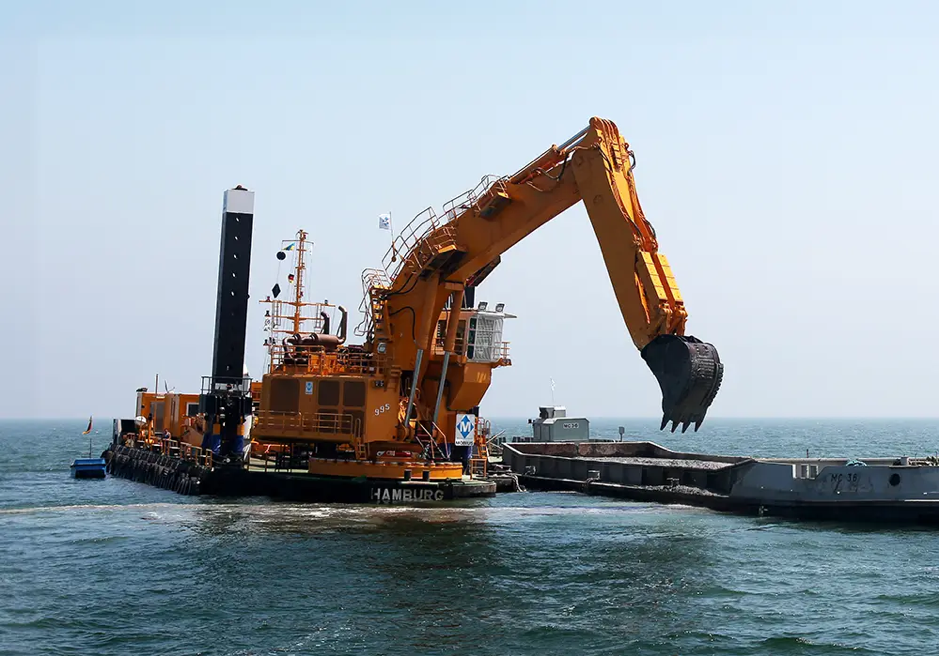
No two marine environments are ever the same, and that’s what makes this field so challenging.
If you have been involved in ports, marine and coastal engineering for any amount of time, you would know that virtually all of these projects deal with:
- Constant tidal variations and shifting sediment
- Harsh saline conditions that corrode steel and concrete
- Limited construction windows due to weather or ecological sensitivity
- High-risk working zones with restricted access
And at the same time, governments and port developers demand faster timelines, reduced disruption, and long-term durability.
Meeting all of these expectations is not possible with the old ways of working. That’s why modern marine structure construction needs to involve new materials, smarter planning tools, and greener building techniques that don’t just withstand the sea, but work intelligently with it.
Now let me give you an overview of the latest innovations that are changing the way the marine industry operates, as promised…
1. Trenchless Technologies for Subsea Pipeline Installation
Earlier, traditional subsea pipeline work often involved large-scale dredging, which disturbed marine ecosystems and slowed down progress.
However, with the latest trenchless solutions like Horizontal Directional Drilling (HDD), pipelines and cables can be laid beneath the seabed with minimal surface disruption.
When you take this approach, you can complete a coastal water intake project without disturbing protected intertidal zones. This saves you time as well as the headache of getting environmental approvals.
2. Use of Geotextile Tubes and Hybrid Sea Walls
In areas prone to erosion, geotextile tubes offer a more flexible alternative to rigid concrete blocks. Filled with sand or slurry, these large textile cylinders can be shaped to suit coastlines and integrated with vegetation.
When combined with traditional sea wall construction, they form hybrid solutions that control erosion, dissipate wave energy, and allow for natural habitat restoration.
At MMCPL, we have implemented this along riverfront projects with tidal variations to great effect.
3. Modular and Prefabricated Marine Structures
Building on water is slow, especially when monsoons or rough seas shrink your working window. By shifting more of the work to prefabrication yards, teams can produce pier heads, decking slabs, or breakwater units in parallel while site prep continues.
So if you are planning to undertake jetty projects, this modular approach can reduce on-site installation time by up to 40%. It will also allow for better quality control and reduced labor exposure to unsafe marine conditions.
4. Self-Healing Marine Concrete and FRP Reinforcement
When the construction is exposed to saltwater, it accelerates micro-cracking and steel corrosion, leading to expensive repairs or early replacements.
The good news is, new material innovations like self-healing concrete (which uses embedded agents to seal micro-cracks when exposed to moisture) and fibre-reinforced polymers (FRPs) that replace rust-prone steel are now game-changers.
At MMCPL, we’re working with suppliers to integrate FRP rods into tidal zone bridges and port walkways, especially in locations where maintenance access is limited.
5. AI-Based Bathymetry and Hydrographic Surveys
Surveying the sea floor used to be manual, time-consuming, and often imprecise.
But today, AI-enhanced hydrographic tools can process real-time sonar and LiDAR data to deliver detailed bathymetric maps.
These allow engineers to assess sediment movement, identify safe anchoring zones, and plan piling with centimetre-level precision.
To give you a practical example, you can use AI-assisted seabed mapping to avoid a submerged rock shelf that could derail piling operations in the future.
6. Smart Buoys and IoT Sensors
Here’s a truism in marine construction: site monitoring doesn’t end after the project is complete. In fact, it never ends. And that’s the reason smart buoys equipped with sensors now offer live updates on wave height, salinity, water quality, and even structural loads on piles or pontoons.
When you use smart buoys and IoT sensors in the maintenance of a floating dock, they can flag abnormal movement patterns during cyclone season, allowing you to reinforce moorings before damage occurs.
And with evolving time, IoT-based structural health monitoring is quickly becoming a core part of long-term marine asset management.
7. Low-Carbon Materials and Green Construction Methods
Sustainability in marine construction isn’t just about eco-friendly headlines; it’s also about cost and compliance issues.
Developers face increasing pressure to reduce the carbon footprint of their projects. At MMCPL, we try our best to use alkali-activated cement (which reduces CO₂ emissions by over 40%) and low-impact piling methods that use vibration rather than percussion to protect underwater life.
The goal isn’t to “go green” for the sake of it, but to meet evolving project standards and regulatory expectations. And reduce construction waste significantly while you’re at it.
8. Drone-Based Inspection and Surveillance
Last but not least, drone tech has made inspecting breakwaters, seawalls, and offshore infrastructure significantly safer and faster.
These aerial tools can capture high-resolution images, detect surface cracks, and even perform thermal scanning, without sending personnel into hazardous conditions.
MMCPL’s Perspective on Innovation in Marine Construction
At MMCPL, innovation is not just a part of a checklist, but woven into our planning, design, and execution workflows.
When we take on a marine construction project, we begin by asking:
- What technology will reduce environmental impact?
- How can we shorten timelines without compromising safety?
- What materials will last 20+ years in these conditions?
- How can we give regulators and communities full visibility into our process?
And based on the answers received, we make strategies that include tools like:
- AI bathymetry software to model seabed dynamics
- BIM and digital twins to simulate tidal and structural load impacts
- Precast fabrication partnerships to ensure marine-grade durability
- Smart monitoring systems to track asset health after commissioning
Our goal is simple: build infrastructure that respects the sea, serves people longer, and uses every new tool that makes that goal more achievable.
Barriers to Adopting New Marine Construction Methods
Innovation in marine construction is promising, but not without its own set of challenges. These are some of the fundamental and sticky ones:
- High Initial Costs: Many modern materials or survey tools require upfront investment, which can be difficult to justify in budget-constrained tenders.
- Talent Shortage: Skilled marine engineers familiar with AI, IoT, and prefab systems are still in short supply.
- Regulatory Bottlenecks: Older compliance frameworks often don’t account for new methods, making it harder to get approvals or run pilots.
How do you overcome these challenges? At MMCPL, we try and address these with these strategies:
- Pilot programs that demonstrate ROI in real conditions
- Training and internal upskilling, especially for site supervisors
- Working with stakeholders and local bodies to align innovation with practical execution
The Future of Marine Construction: Modular, Monitored, and Ecosystem Friendly
The future of marine construction is no longer just steel and concrete. It’s about modularity, precision, and environmental responsibility.
What are some of the developments you’ll see in the next few years in this industry? I’m betting on
- Wider adoption of real-time data platforms for underwater construction
- Prefab marine structures that go from blueprint to installation in weeks
- Environmental dashboards that report live project impact metrics
At MMCPL, we’re already preparing and building for this future by collaborating with material scientists, tech providers, and forward-thinking developers.
If you’re ready to build infrastructure that lasts, adapts, and coexists with nature, we’d love to partner with you. Get in touch if you’re aspiring to bring modern engineering to the shore!
