
When news broke about the Gambhira bridge collapse in Gujarat, many of us in the engineering community weren’t just shocked, but we were asking hard questions.
View this post on Instagram
Are we still designing with assumptions that belong in another era? Are we still relying on age-old materials for building our bridges and flyovers?
Sadly, that answer is often yes.
The reality is that most bridges in India still rely on materials designed for traffic loads and weather conditions of the mid-20th century.
However, the world today is totally different, with climate extremes, heavier vehicles, more vehicles, and maintenance regimes that are stretched thin.
So, if we want bridges that outlast not just decades but generations, we need to rethink the fundamental components used in bridge building.
In developed countries, advanced materials are changing the game globally by reducing corrosion, extending lifespans, and cutting maintenance costs. And India can’t afford to lag behind.
Why India Must Rethink Materials Used in Bridge Building
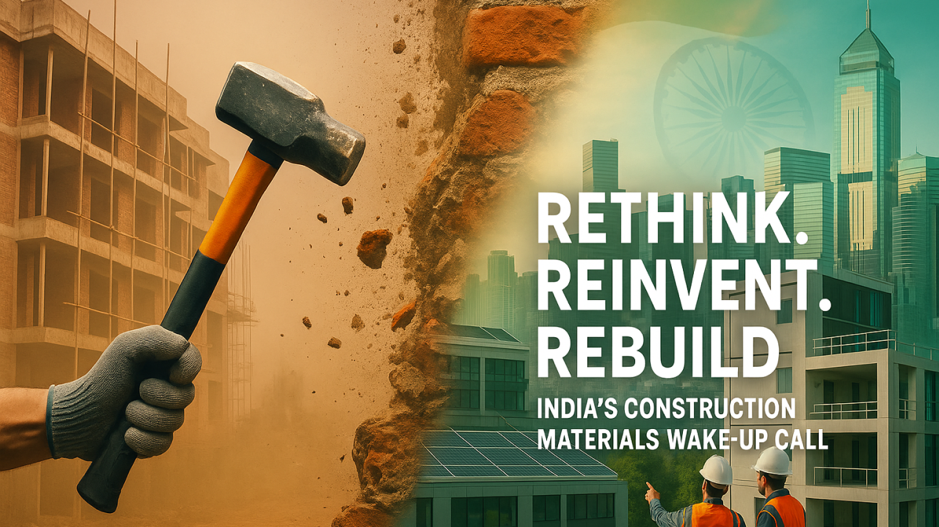
The recent Gujarat tragedy is not an isolated story. Before that, Bihar’s Aguwani-Sultanganj bridge collapsed twice during construction, raising eyebrows about design integrity and material performance.
And each failure is an open invitation to a human disaster, with lives lost and public trust eroded, caused by an engineering fault line.
In the past, engineers used to choose materials like plain concrete and mild steel, but they are not invincible anymore because steel corrodes, especially in saline coastal belts, and concrete cracks under thermal stress and load fatigue.
Moreover, in flood-prone areas, expansion joints and supports degrade faster than maintenance cycles can keep up.
And when the degradation happens faster than the maintenance cycles, the contractor, builders, consultants, government, and every other stakeholder of the project face not only financial losses, but also backlash in many other ways, including legal claims and a damaged reputation.
This clearly proves that longevity in modern bridges is not just about design calculations. It’s also about innovation in materials used in bridge building, which needs to be integrated with smarter design and construction practices.
The good news is… the change is already happening.
Traditional vs Advanced Materials: What’s Changing?
For decades, reinforced concrete (RCC), structural steel, and bitumen were the backbone of bridges in India. Because they were affordable, accessible, and easy to work with.
But they came with predictable vulnerabilities like corrosion, cracking and escalating costs, complicating their maintenance.
Contrast that with today’s advanced materials used in bridge building. Fiber-reinforced polymers (FRP), ultra-high-performance concrete (UHPC), weathering steel, glass-fiber-reinforced polymer (GFRP) bars, and corrosion-resistant alloys are rewriting expectations.
So what makes them different? Modern-day bridge building materials combine higher strength-to-weight ratios, superior resistance to environmental stress, and in some cases, self-healing properties.
For example, Japan has bridges standing strong with weathering steel for decades. Europe has embraced UHPC for elegant long-span bridges that need minimal upkeep. India, meanwhile, is just beginning to pilot these innovations.
Advanced Materials Used in Bridge Building Today
Modern bridge engineering involves a lot more materials and components that aren’t obvious or commonly known.
1. Fiber Reinforced Polymer (FRP)
FRP is lightweight but strong, making it ideal for retrofitting old bridges that weren’t designed for today’s traffic. It is corrosion-resistant, which is invaluable for coastal states like Kerala or Maharashtra.
In fact, pedestrian bridges in the US have relied on FRP for years, and trial applications are now happening here in India.
2. Ultra-High-Performance Concrete (UHPC)
UHPC is practically indestructible. With compressive strength exceeding 150 MPA, it resists cracking and can stretch a bridge’s lifespan past a century.
Delhi has already tested UHPC in overpasses, and the results show fewer visible cracks and reduced maintenance interventions.
3. Weathering Steel
Unlike ordinary steel, which needs periodic repainting, weathering steel develops a protective oxide layer that shields it from deeper corrosion.
Countries like Japan and the US have been using weathering steel in highway bridges for decades. As for India, where repainting contracts often go underfunded, weathering steel could be a gamechanger.
4. GFRP (Glass Fiber Reinforced Polymer) Bars
Reinforcement steel is notorious for rusting in humid or marine zones. GFRP rebars don’t corrode, making them ideal for bridges near coasts or rivers.
For MMCPL and similar firms working in marine infrastructure, this is a material worth serious attention.
5. Self-Healing Concrete
Self-healing concrete is still under research, but has a promising future. The idea is to have concrete that repairs itself when cracks form, using bacteria or chemical capsules embedded in the mix.
For a country with harsh monsoons, where micro-cracks expand rapidly, this could drastically reduce long-term maintenance costs.
How Do These Materials Directly Improve Bridge Longevity?
So, how do materials used in bridge building actually change on the ground? Well, quite a lot of things, such as
- Corrosion resistance: With the right materials like FRP and GFRP, there will be no or minimal rust, meaning structures survive far longer in coastal or flood-hit regions.
- Fewer cracks, less maintenance: UHPC and self-healing concrete reduce micro-cracking, which means maintenance budgets aren’t constantly drained.
- Higher load efficiency: Advanced alloys and composites carry heavier vehicles without overstressing the structure.
- Earthquake safety: Some materials absorb energy better, a critical factor in zones like the Himalayas.
- Faster, safer builds: Precast advanced materials shorten construction time, reducing errors and labor fatigue.
In essence, these advanced materials don’t just add years to a bridge’s life—they also cut lifecycle costs, improve safety, and create room for bold designs.
MMCPL’s Philosophy – Building Bridges That Last Generations
At MMCPL, we’ve never seen a bridge as “just another structure.” It’s a connector of lives, economies and communities.
And that’s the specific reason we consider climate, geography, and projected loads before finalizing the materials that go into the project. This is true across all our bridge and flyover projects.
To give you an example, for a flyover built in a flood-prone zone, we used anti-corrosive steels and advanced concrete mixes to extend durability where water exposure is constant. In seismic areas, we’ve leaned on flexible reinforcement strategies.
Our engineers are trained in sustainable, longevity-first materials. Being in the industry for nearly five decades, we know that a bridge has to hold up not just against today’s demands but also tomorrow’s uncertainties.
For us, a bridge isn’t only about crossing a river or valley. It’s about leaving behind a legacy that stands tall, generation after generation.
Time to Reinvent the Basics
Climate change and heavier traffic are the new realities. Therefore, clinging to outdated materials is not just risky, it’s negligent. Every bridge project today should start with a material strategy, not just a budget spreadsheet.
At MMCPL, we’re committed to helping consultants, government bodies, and EPC firms adopt advanced materials used in bridge building that deliver long-term safety, cost efficiency, resilience, and sustainability.
Because when a bridge fails, it doesn’t just result in broken concrete and steel—it results in broken confidence of an entire community. And that’s something we simply cannot afford.
