
The industry is hitting a massive inflection point. Between the fallout of the 2025 tariff spikes on steel and the non-stop pressure to hit net zero, the way we’ve been building for the last thirty years just isn’t cutting it anymore.
In 2026, the global infrastructure scene is dealing with a weird paradox: we’ve got more projects than ever—thanks to massive urban shifts in Asia and the IIJA tailwinds in the US—but we’re doing them with fewer experienced hands on deck.
If you think 2026 is going to be “business as usual,” you’re going to get left behind. We’re seeing a shift from just “getting it built” to “engineering for longevity.”
This year, the most impactful civil engineering trends aren’t just about cool gadgets; they’re about survival in a market that’s increasingly expensive and climate-volatile.
Here’s what you actually need to have on your radar.
Why Civil Engineering Best Practices Matter More Than Ever in 2026
Let’s be real—the margin for error has evaporated. Whether you’re working on the Middle East’s giga-projects or upgrading aging networks in Europe, the demands are the same.
Clients want assets that last 100 years, but they want them delivered in half the time and with a fraction of the carbon footprint.
We’re seeing governments get aggressive with ESG mandates, and insurance companies are starting to look at “climate-readiness” before they’ll even touch a project.
Understanding these civil engineering trends is your hedge against risk. It’s the difference between winning a bid because you’re the cheapest and winning it because you’re the only one who can actually guarantee the asset’s performance in 2040.
So what are the engineering trends you, as a civil engineering industry professional, should be on top of to push the boundaries of your trade further in 2026?
1. Climate-Resilient Infrastructure as a Design Standard
We’ve officially stopped designing for the 1-in-100-years flood because those are happening every five years now.
The trend for 2026 is dynamic modeling. We’re moving toward roads that can handle 50°C (122°F) surface temperatures without rutting and coastal defenses that use ecosystem-based adaptation rather than just more concrete.
It’s about building flexibility into the design so the highway or bridge can handle future-scenario climate loads we haven’t even seen yet.
2. Digital Twins Becoming Core Engineering Tools
A Digital Twin isn’t just a 3D model you look at once; it’s a living, breathing data set.
In 2026, we’re seeing “6D BIM” takeover, where the digital replica stays active long after the ribbon-cutting.
Asset owners are using these to run “what-if” scenarios: What happens to this bridge’s structural integrity if we increase heavy freight traffic by 20%? It’s the move from static drawings to lifecycle intelligence.
3. AI-Driven Planning and Predictive Engineering
AI has finally graduated from a buzzword to an everyday on-site tool. We’re seeing generative design algorithms that can run 5,000 different iterations of a structural frame to find the one that uses 15% less steel but maintains the same safety factor.
More importantly, predictive engineering is helping us spot “clashes” in the design phase before they turn into million-dollar change orders in the field.
4. Modular, Prefabricated, and Off-Site Construction

The labor shortage is the elephant in the room, and modular is the fix. We’re seeing a massive push toward “Design for Manufacture and Assembly” (DfMA).
By shifting 60% of the work to a controlled factory environment, we’re seeing project timelines for bridges and utility hubs get slashed. It’s cleaner, it’s safer, and frankly, the quality control is miles ahead of what you can do in a muddy trench in the rain.
5. Low-Carbon and High-Performance Construction Materials
Cement is the new target for decarbonization. In 2026, the industry is pivoting toward “Green Concrete” — using things like calcined clays or recycled glass to cut the clinker content.
We’re also seeing a rise in self-healing materials where microcapsules of “healing agents” pop open to seal cracks automatically.
If your material list for 2026 doesn’t account for embodied carbon, you’re likely to lose out on government-funded contracts.
6. Smart Infrastructure with Embedded Sensors
Why send a guy up a ladder to check for cracks when the bridge can just tell you it’s hurt? We’re embedding Fiber Optic Sensing (FOS) directly into the rebar and pavement.
These “smart” assets give us a real-time nervous system. This is one of those civil engineering trends that pays for itself ten times over by catching a $50,000 repair before it turns into a $5 million replacement.
7. Water-Sensitive and Nature-Based Engineering Solutions
Stormwater is finally being treated like an asset instead of a liability. We’re seeing the “Sponge City” concept go global. This means permeable pavements that let water through and urban wetlands that double as filtration systems.
In 2026, the goal is to keep water where it falls, recharging local aquifers instead of overwhelming our sewer systems.
8. Workforce Transformation in Civil Engineering
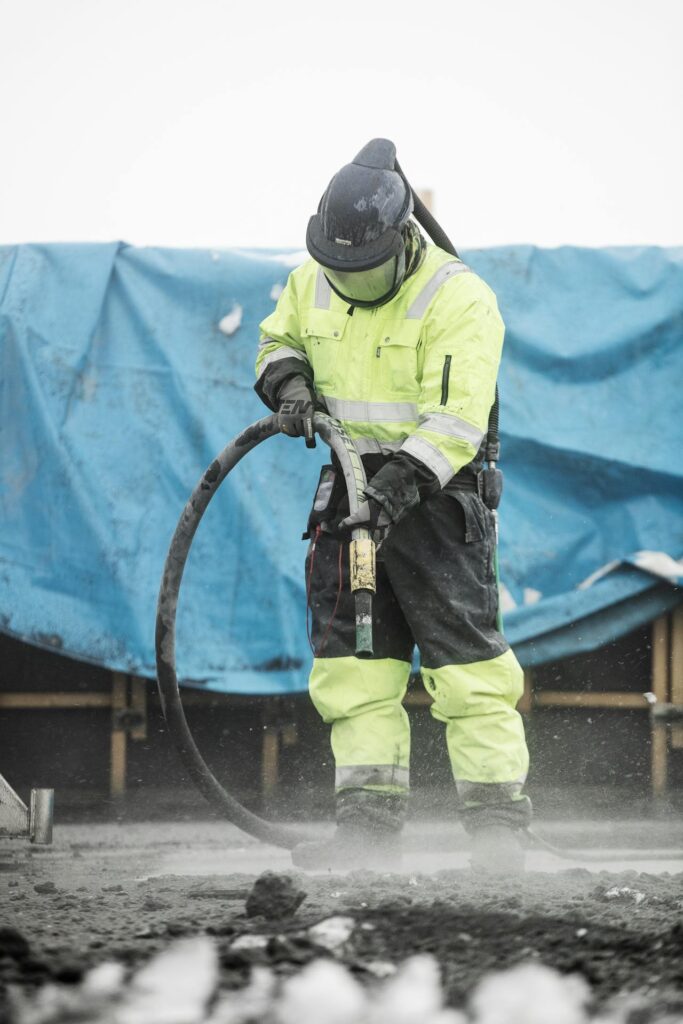
The “old school” engineer who only knows structural calcs is becoming a relic. The new breed needs to be part data scientist, part environmental consultant.
We’re seeing a shift toward cross-disciplinary teams where the civil lead is working side-by-side with software devs and ecologists.
It’s a total culture shift, but it’s the only way to tackle the complexity of modern infrastructure projects.
Build Your Project with Modern Civil Engineering With MMCPL
The writing on the wall is clear: 2026 is going to be a tough year for firms that stay stuck in 2010. The rewards are going to the teams that can pivot fast.
That’s exactly why MMCPL has become the go-to solution for developers and agencies who can’t afford a “learning curve.”
From deploying AI-driven planning to sourcing the latest low-carbon materials, MMCPL ensures your project isn’t just compliant today, but resilient and sustainable for the next fifty years.
We don’t just talk about trends and innovation in infrastructure and civil engineering; we’ve already baked them into our workflow.
If you’re looking for a partner who understands the “on-ground” realities that matter in 2026, you know where to find us.
