
Industrial construction planning, be it urban or rural, is going through one of the fastest transformations in decades. Warehouses are getting bigger, data centers are getting heavier, refineries are becoming more complex, and logistics hubs are becoming more automated.
But underneath all this growth, something much less visible has quietly become the backbone of modern industry—structural steel fabrication.
Structural steel fabrication is no longer a back-end process hidden inside a fabrication yard. Today, it shapes project timelines, structural reliability, and even long-term sustainability.
In this article, we will explore how far fabrication has evolved and why industries that depend on speed and precision now rely on steel more than ever.
What Makes Structural Steel Fabrication the Backbone of Modern Industry
For years, fabrication was seen simply as “cutting and assembling steel.” However, that definition is outdated today.
These days, modern structural steel fabrication is an engineering workflow that runs through design, modelling, precision cutting, robotic welding, digital quality checks, and modular assembly, and all of these happen long before the first truck arrives at the site.
What gives steel fabrication its power is predictability. When a refinery needs a complex pipe rack or a factory requires a multi-storey frame that must carry heavy dynamic loads, steel brings a level of consistency that concrete simply can’t.
Most of the hard work now happens off-site. For example, engineers convert 3D BIM models into fabrication drawings, cutting lists, and weld maps off-site. Fabricators execute them with CNC-level accuracy. By the time the structure reaches the site, it’s almost like assembling a high-precision kit.
And that’s why industrial parks, metro depots, logistics corridors, and energy plants across the U.S., India, and East Asia have shifted to steel-first design because cutting even two months from a commissioning schedule can change the economics of an entire project.
How Structural Steel Fabrication Transforms Industrial Construction Projects

The reason structural steel fabrication is transforming the industrial construction projects is that when fabrication becomes the centrepiece of industrial design, everything else changes.
The biggest shift is speed. Pre-engineered modules like columns, trusses, pipe racks, and conveyor galleries arrive ready to be erected. This eliminates weeks of shuttering, curing, and on-site labour, while also avoiding weather-related delays.
But speed isn’t the only benefit. Structural steel fabrication also gives industrial developers something they rarely get: flexibility. Factories often expand. Refineries add new units. Logistics hubs grow every year. Steel allows future modifications without major structural disruption.
There’s also the performance aspect. Because steel has a superior strength-to-weight ratio, it can handle heavy equipment loads, high vibrations, and wide spans without bulky sections.
And in the long run, cost efficiency comes from consistency. Factory-controlled fabrication reduces waste, errors, rework, and idle time.
U.S. modular warehouses and India’s new generation of industrial clusters have shown this repeatedly—fabrication-first design is faster, cleaner, and more predictable.
5 Game-Changing Innovations in Structural Steel Fabrication That Are Reshaping Modern Infrastructure
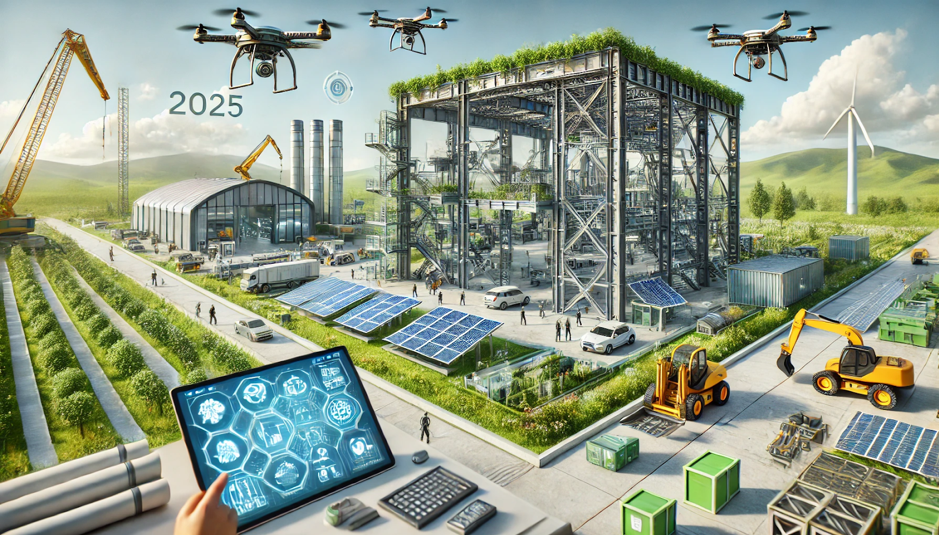
When it comes to structural steel fabrication, there are many innovations shaping the future of modern infrastructure:
- Automation and Robotics in Fabrication
Robotic welding arms, automated beam lines, and CNC plasma cutters are not “future tech” – they’re standard tools in advanced fabrication shops. Automation removes human error, accelerates production, and maintains uniform weld quality. To give you an idea, fabricators in Texas, Dubai, and Gujarat report up to 30% schedule savings using robotics for repetitive assemblies.
- Digital Twins and BIM Integration
Modern projects are built twice—first digitally, then physically. Digital twins allow every steel member, bolt, splice, and connection to be simulated before fabrication. This reduces clashes between civil, mechanical, and electrical systems, saving enormous rework costs.
- Modular & Offsite Fabrication
Industrial construction has now started functioning like manufacturing. Entire stair towers, mezzanines, equipment platforms, and pipe racks are built off-site and lifted into place. This directly benefits timelines. For petrochemical plants and renewable energy facilities, modular fabrication can shorten field activity by months.
- Sustainable and Low-Carbon Steel Fabrication
As the world is aiming for net-zero, fabrication yards are shifting to recycled steel, electric furnaces, and material reuse. Many European projects now mandate environmental product declarations (EPDs) for fabricated steel elements. The sustainability advantage is significant here as it can be reused or repurposed indefinitely.
- Advanced Protective Coatings
Modern coatings like polyurethanes, flame-retardant primers, and anti-corrosive systems extend steel life dramatically, especially in coastal or industrial environments. Refineries in the Middle East and port facilities in India now specify multi-layer coating systems to achieve 40-50 years of corrosion resistance.
Each of these innovations reinforces the same idea: structural steel fabrication is now a technology-driven process, not a manual craft.
Challenges to Overcome in the Structural Steel Fabrication Ecosystem
Let’s face it—even the most sophisticated fabrication systems face constraints, and acknowledging them is the only way to overcome them.
When it comes to structural steel fabrication, there’s a lack of skilled manpower for advanced fabrication. In fact, many regions have fabricators, but few have precision welders or BIM-ready engineers.
Quality assurance also becomes complex when thousands of members are produced simultaneously, as it requires digital QA, barcode tracking, and tight coordination.
Procurement adds another challenge. Steel price volatility can disrupt project budgets, forcing EPC firms to lock in rates months earlier than before.
And finally, coordination is everything. A brilliant fabrication plan fails instantly if design teams, procurement, and site managers don’t stay aligned.
The upside? Every one of these gaps is solvable with integrated project management, which involves better planning, more technology, and cross-disciplinary collaboration.
Why The Future of Industrial Construction Lies in Smarter Steel Fabrication
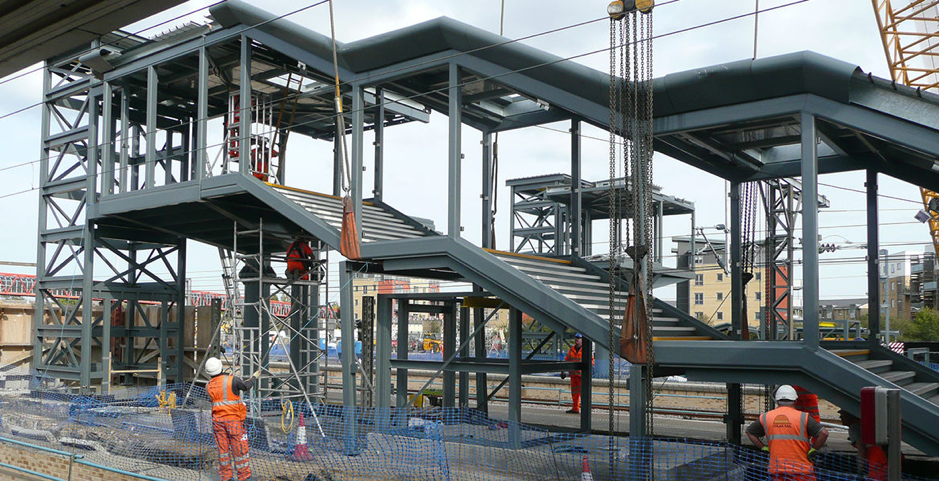
Across the U.S., Europe, and India, industrial developers are moving toward hybrid structural approaches. Steel is used where speed and flexibility matter, and concrete where mass and cost efficiency dominate.
Nonetheless, the real shift is happening inside fabrication yards. AI-driven nesting systems speed up modular construction while reducing waste, 3D printing of steel components is quite common, and real-time digital monitoring is the norm.
Global sustainability targets also push steel to the forefront. Since steel can be recycled endlessly, the industry is transitioning toward circular fabrication systems where old steel sections re-enter the supply chain.
Countries building renewable energy factories, data centres, and logistics corridors are already seeing the results as projects are finishing earlier, buildings are lasting longer, and industrial expansions are becoming simpler to execute.
MMCPL’s Approach to Smarter Structural Steel Fabrication
When it comes to structural steel fabrication, or any project in that case, MMCPL’s engineering-first approach integrates design, modelling, and fabrication planning into a single workflow. From complex industrial corridors to heavy-load structures, the focus is always on precision, durability, sustainability, and modular execution.
Our teams combine digital twins with practical fabrication expertise, ensuring structures perform exactly as intended, whether they’re built in coastal regions, industrial belts, or high-wind zones.
If you’re planning industrial or infrastructure projects that demand speed, reliability, and long-term resilience, get in touch with our team – we partner with EPC firms, developers, and public agencies to deliver steel solutions that truly withstand the test of time.
