
If you drive through Los Angeles or Bengaluru on a Monday morning, you know that traffic doesn’t just waste time—it probably drains entire economies.
Billions of dollars in fuel, productivity, and sanity vanish into a standstill each year.
However, there are some cities across the world where things look different. The same rush hour feels strangely fluid as signals change before jams form, vehicles move in rhythm, and roads seem to predict where the pressure will hit next.
That’s the pinnacle of “traffic flow optimization.” It’s a blend of engineering, planning, and data intelligence. Newer city plans are learning that managing congestion is more than just adding more lanes. We need to make sure that every inch of road works smarter.
Let’s look at how innovation enables urban infrastructure to work with, and not against, the traffic that defines it.
The Connection Between Urban Infrastructure and Traffic Flow
We know that every turn radius, every signal pole, every misplaced pedestrian crossing creates traffic and affects how a city moves.
The good news is, all the traffic patterns of a city tell the planner what’s broken. It’s a two-way conversation between roads and the people using them. When that feedback loop works, it helps traffic ease. But when there’s no feedback loop, cities start choking.
For example, Singapore’s GLIDE system which is an adaptive signal control platform that constantly adjusts lights using live data from hundreds of intersections!
Los Angeles did something similar with ATSAC, a citywide control network that fine-tunes 4,500 intersections in real time, saving millions in fuel and emissions annually.
Now, cities in India are joining the movement. New Delhi, for instance, redesigned major intersections using smart geometry and adaptive signals ahead of the recent G20 summit. Though it was a small redesign, it cut idling time by nearly 20%.
All of these examples show how modern infrastructure is reshaping urban life to a great extent.
When it comes to optimizing traffic flow perfectly, it’s a combination of data, design, and human behavior.
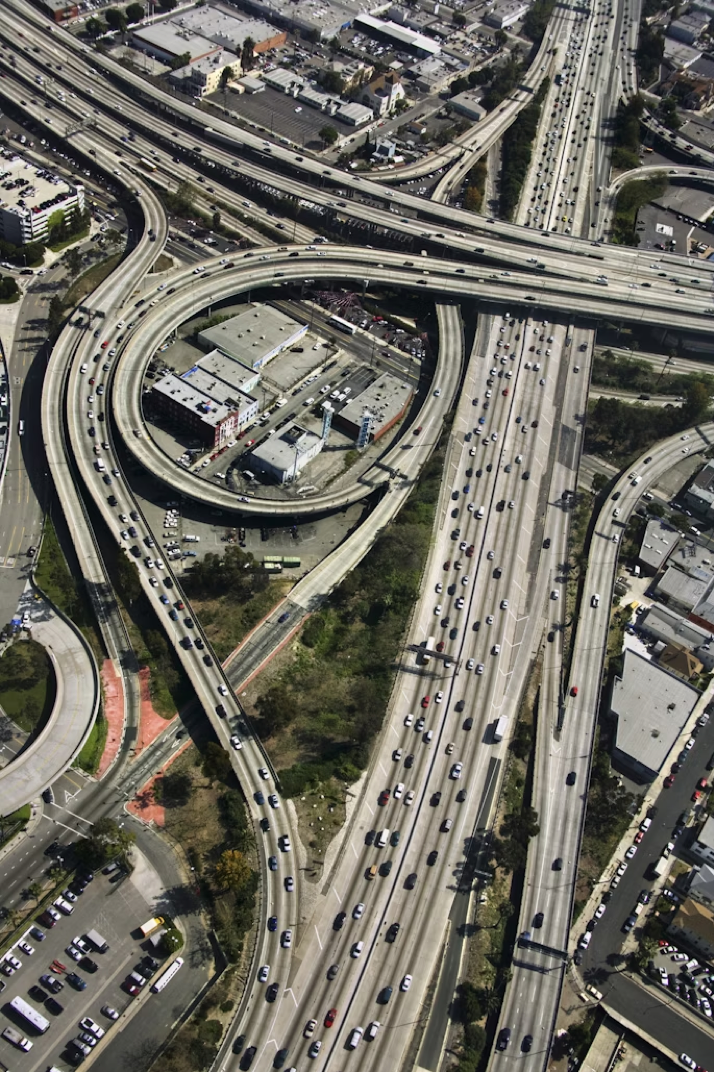
Here are the core principles that keep traffic flowing and cities functional:
-
Network Efficiency
More roads don’t always mean less congestion. In fact, they often just move the traffic somewhere else.
Here, the real trick is designing for network efficiency, which means aligning routes, junctions, and bypasses so the load spreads naturally.
In Dallas and Phoenix, LiDAR mapping and GIS-based simulations now allow planners to test how minor road tweaks will impact flow before construction begins. This approach saves millions in rework and reduces long-term emissions.
In India, MMCPL applies a similar logic when designing ring roads or grade separations. Instead of pouring more asphalt, the team focuses on smoother transitions, right-turn geometry, and better link balance—small engineering choices that quietly make or break a city’s rhythm.
-
Signal Synchronization
You can design the perfect road, but if the signals are off, nothing moves. Signal synchronization is the invisible choreography of modern traffic, which is the most powerful tool for traffic flow optimization.
Los Angeles’ ATSAC system, for instance, reduced average delays by 20% simply by allowing traffic lights to “talk” to each other.
Washington, D.C. took it further with AI-based adaptive control that adjusts signals to rain, events, or even nearby construction activity.
In Indian metros such as Pune and Chennai, hybrid adaptive models are being tested, where they are combining real-time sensors with predictive algorithms.
These systems can shift cycle lengths every few minutes based on flow data. This is a low-cost, high-impact innovation that brings automation into everyday commuting.
-
Modal Integration
The easiest way to clear a road is to give people a reason not to use it. That’s the philosophy behind modal integration. It’s about designing infrastructure that connects buses, metros, bikes, and pedestrians into one unified system.
Stockholm, for example, uses an integrated network of tramlines, bus corridors, and cycling routes that align within walking distance of major job hubs.
Delhi NCR has achieved similar success by synchronizing metro stations with feeder buses and pedestrian bridges, allowing seamless transfers without additional car trips.
With modal integration, the idea isn’t to ban vehicles; it’s to balance them. Remember, a road that moves cars but isolates cyclists and pedestrians isn’t modern, it’s incomplete.
-
Incident Management
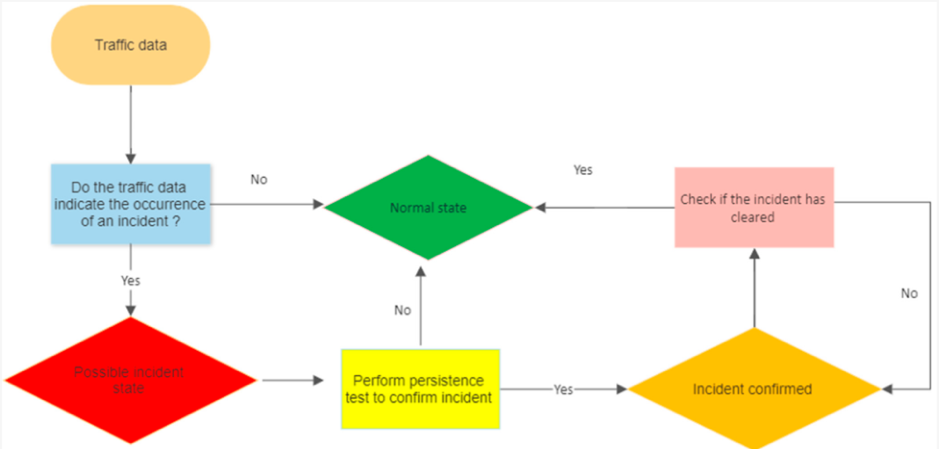
A stalled truck can paralyze an entire corridor. Good cities expect it; great ones plan for it.
Incident management is about building the reflexes that keep a city’s pulse steady when something goes wrong.
New York’s Traffic Management Center uses sensors, cameras, and message signs to redirect flow within minutes of an accident. Amsterdam takes it further with vehicle-to-infrastructure (V2X) alerts that warn approaching drivers before they hit a slowdown.
MMCPL has been integrating real-time monitoring systems into highway and expressway projects in India, linking toll plazas and control rooms so emergency response teams can deploy instantly.
In short, effective traffic optimization is not about stopping accidents; it’s about stopping the ripple effect that follows them.
-
Demand Management
Sometimes, the smartest infrastructure is invisible. Demand management focuses on influencing how people move rather than where they move.
London’s congestion pricing changed driving habits dramatically, which reduced peak-hour traffic by 18%, improved air quality, and public transport ridership surged.
Singapore’s variable tolling system goes even further, charging more when roads are busiest, automatically spreading demand.
Moreover, U.S. cities like Seattle and San Francisco are experimenting with remote work incentives and real-time parking fee adjustments to manage congestion.
In Indian metros, integrated ticketing systems for metro, bus, and shared mobility are quietly achieving the same goal of efficiency without enforcement.
Because ultimately, traffic isn’t just an engineering problem. It’s a human behavior challenge, and behavior changes when the system makes smarter choices easier.
Optimize Urban Infrastructure for Smooth Traffic Flow with MMCPL
The future of urban mobility lies at the crossroads of design and intelligence. Keeping in mind the scale at which urbanization is happening, cities can’t afford to treat traffic flow optimization as an afterthought, and it must be built into every layer of infrastructure planning.
At MMCPL, we design projects that think ahead by integrating data-driven modeling, sustainable mobility systems, and practical engineering to help cities move better. From smart intersections to multimodal corridors, our approach is rooted in the belief that efficient movement builds resilient cities.
Get this: smooth traffic isn’t a privilege—it’s a design outcome. And with the right balance of technology, insight, and planning, cities can definitely make mobility feel as seamless as it should have been all along.
