
In a village outside Bhopal, people used to travel two hours on a mud track to reach the nearest hospital. When the rains hit, that track became a river of clay, and families simply waited, hoping emergencies would pass.
Then came a paved rural road under Pradhan Mantri Gram Sadak Yojana (PMGSY). Suddenly, the same journey took twenty minutes. For the villagers, more than the road, it was about safety, opportunity, and dignity—all thanks to the all-round increase in urban, rural and industrial planning happening lately.
Stories like this explain why rural infrastructure development is no longer a side note in policy. Instead, it’s the foundation of India’s future. With 65% of the population still living in villages, the future of rural infrastructure development is all about leading growth in ways that cities can’t sustain anymore.
Why Rural Infrastructure Development Is a National Priority Today
The numbers tell one part of the story. Migration from rural areas to cities keeps swelling, which is highly motivated by necessity rather than choice. When a farmer has to move to Delhi, it is because his produce rots before it reaches markets. Such cases clearly show that it isn’t always a case of “urban aspiration” – many times, it’s a “rural failure.”
Another reason why we need strong rural infrastructure is that villages have huge potential. Rural India could power MSMEs, agri-processing units, handicrafts, and even rural tourism.
But without reliable electricity, cold chains, proper roads, and environmental impact assessment upfront, that potential remains of no use.
And that’s why government schemes like PMGSY, BharatNet, and Jal Jeevan Mission are not isolated programs but pieces of a bigger puzzle.
However, there’s one thing that is often overlooked in rural infrastructure development – climate resilience. Decentralised rural systems like solar microgrids, rainwater harvesting, and community clinics actually protect India from climate shocks.
When one city grid fails, a rural solar grid still powers homes. When drought hits, rainwater tanks keep villages alive. This is why rural infrastructure development has moved from charity to strategy.

And this development has some foundational pillars as discussed below.
6 Pillars of the Future of Rural Infrastructure Development
What will truly shape tomorrow’s villages? Well, here are six trends that stand out, and each is reshaping the countryside in its own way.
1. Integrated Planning Across Sectors
Today too many villages have half-built projects—a school without a road, a water tank without pipes, a clinic without power, the list goes on
But the real future is about integration. Rural clusters that combine roads, power, telecom, water, and health infrastructure in one master plan. It’s cheaper, faster, and more impactful than piecemeal efforts.
2. Digital Infrastructure as the Foundation
If roads connect people physically, digital connects them to the world. BharatNet is laying optical fibre, 5G is reaching rural belts, and digital kiosks are popping up in gram panchayats.
Suddenly, a villager can consult a doctor in Delhi via telemedicine or access government services without a middleman.
In many ways, digital is the leap that may do for rural India what highways once did for cities.
3. Green and Sustainable by Default
The future of rural infrastructure development cannot repeat urban mistakes of high-carbon, resource-heavy projects.
Villages are already experimenting with solar pumps in Rajasthan, rainwater harvesting systems in Tamil Nadu, and micro-hydro water resource management in Himachal.
Construction too is shifting to eco-materials, to stabilised mud blocks, fly ash bricks, and bamboo composites.
These aren’t “nice extras.” They’re baseline best practices for a sustainable future.
4. Community-First Design
This one sounds obvious, yet is often ignored. No two villages face the same issues.
Flood-prone Assam needs raised housing, strong and swift drainage, and other flood risk management systems built in. Villages in the Western Ghats need slope-friendly road designs.
And in such situations, listening to gram sabhas avoids white-elephant projects and ensures infrastructure actually gets used.
5. Modular and Cost-Effective Construction
Time matters. Money matters. Precast toilets, prefab health centres, and road layers cut timelines drastically.
A clinic built in three weeks is better than one promised for three years. Modular designs also allow upgrades through which you can turn today’s single classroom into tomorrow’s extended block.
6. Mobility and Rural Logistics
The last pillar is about movement. A farmer doesn’t need a six-lane expressway; he needs a reliable first-mile road to the mandi.
Cold chain networks in Gujarat’s dairy sector prove how rural logistics can transform incomes. And when we scale it nationally, these systems could change agricultural economics forever.
Challenges in Implementing Rural Infrastructure at Scale
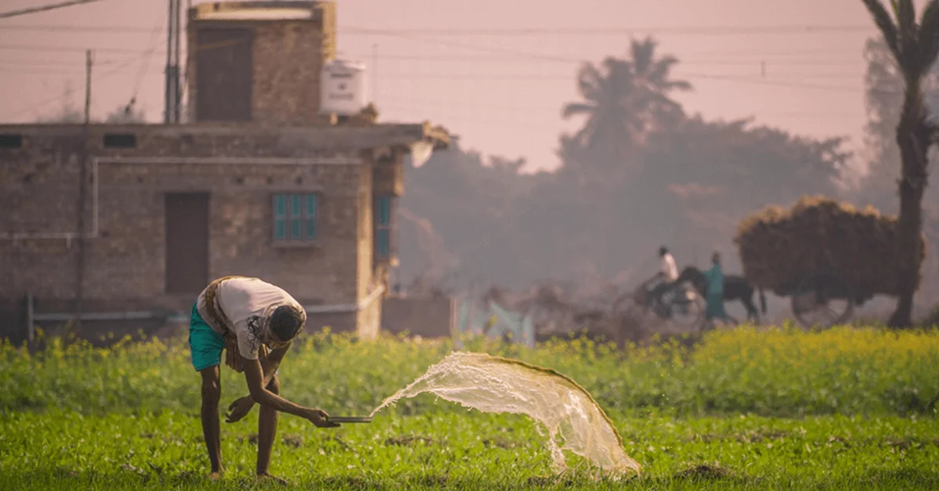
Now it would be naive to pretend that scaling this rural infrastructure development vision is easy.
One of the biggest and constant barriers in this is terrain with washed-out roads in the Northeast, desert conditions in Rajasthan, and snow-blocked paths in Himachal. Further, there is a lack of skilled manpower in remote areas, and projects often rely on outside contractors at higher costs.
Money is another hurdle. Most rural projects depend on public funding, which means bureaucracy, delays, and sometimes misallocation.
Then there’s land with fragmented plots, family disputes, and slow acquisition keeps projects stuck for years.
And yet, progress is possible.
At MMCPL, we’ve seen phased pilots work wonders. Start small, deliver fast, and scale later.
Local hiring and training not only cut costs but also create ownership. Projects built with communities, not just for them, are the ones that last.
MMCPL’s Vision for Rural Infrastructure Development
At MMCPL, our view is simple: Villages deserve infrastructure that lasts a generation, not just until the next election. That’s why we blend cutting-edge technology with ground realities.
In one public health project, resilience meant modular clinics equipped with telemedicine links. In another, it meant drainage systems that held against seasonal floods. In all of these, the philosophy is the same: context-driven design.
We also bring different subject-matter experts such as civil engineers, planners, and social specialists under one roof, working as one team. That’s how you build ecosystems, not just assets. Roads that link to clinics. Water systems that power agriculture. Digital backbones that enable governance.
Every one of our engineering and infrastructure projects, across sectors and industries, reflects the same principle – long-term value, not short-term optics.
Building Tomorrow’s Villages, Today
Rural infrastructure development will be central to India’s next chapter, to self-reliance and the vision of “Atmanirbhar Bharat.”
Because tomorrow’s India isn’t being built in metros alone. It’s being shaped brick by brick, road by road, and network by network in its villages.
And when that is done well, it will ease migration pressures, unlock local economies, and create communities resilient to global shocks.
But if we fail, it risks repeating urban mistakes in fragile rural ecosystems. That’s why rural infrastructure needs to focus on smarter planning, greener solutions, and listening to communities first.
At MMCPL, we’re ready to partner with governments, NGOs, and civic planners to make that vision real. Get in touch if you’re a civic agency or contractor working in rural environments!
