
Over 200 people were killed when flash floods swept through the northern Indian state of Uttarakhand in 2021.
A cloudburst in Kishtwar earlier this August claimed at least 67 lives, left around 200 missing, and injured more than 300.
And let’s not assume this is only a developing-world problem. Even the United States, with all its infrastructure muscle, has had highways submerged and towns flattened time and again after hurricane-driven rainfalls.
All of these data and facts simply tell us one thing: no country is fully immune when it comes to flood risk management. Traditional fixes like sandbags or embankments may have worked in another era, but today they’re stretched to breaking point. Climate extremes are faster, heavier, and less predictable.
So the question isn’t whether floods will come. They will. The real issue is whether our systems are ready to handle them.
In this blog, we have covered sustainable flood risk management strategies that go beyond quick patches and build lasting resilience for both cities and rural communities.
Let’s first understand why flood risk management is an emergency right now.
Why Flood Risk Management Must Go Sustainable NOW
There’s no doubt that some of the latest urbanisation trends are a double-edged sword. On one side, it drives growth. On the other hand, it covers natural absorbent land with concrete.
When a cloudburst happens, rainwater has nowhere to go except into storm drains, which, let’s be honest, are usually clogged or undersized.
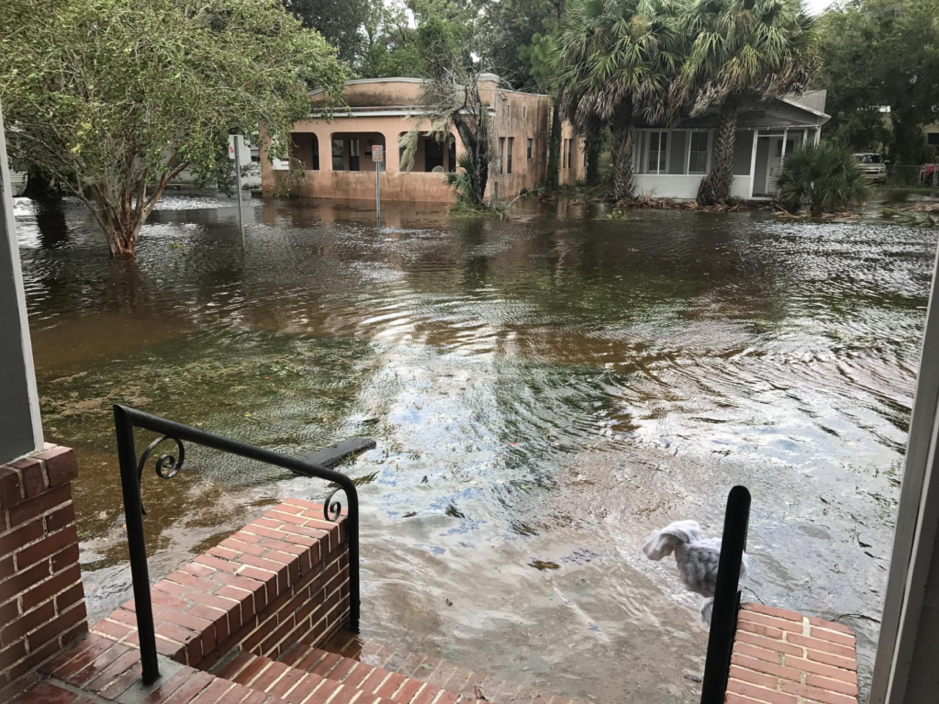
Then there’s climate change. We’re no longer dealing with predictable monsoons. Instead, short, violent bursts of rainfall dump more water than old systems can handle. And traditional drains and embankments weren’t designed for this, and patching them year after year doesn’t solve the bigger problem.
Plus, the cost of ignoring this is staggering. Every flood wipes out homes, roads, and livelihoods, draining millions from state or national budgets. Worse, it leaves communities in limbo for months.
Among all of these, the shift we need is from reacting after disaster strikes to building resilience before it hits, along with water resources and irrigation services, because that’s the heart of sustainable flood risk management.
7 Sustainable Flood Risk Management Solutions That Work
So, what does “resilience” actually look like on the ground when it comes to flood risk management?
Here are seven approaches that are showing results in India and beyond.
1. Nature-Based Solutions (NbS)
Sometimes the best engineering is nature itself. Wetlands, forests, and mangroves act as giant sponges.
Odisha has seen success by protecting mangrove belts in its coastal delta, and these natural barriers absorb tidal surges and cut down flooding inland. Reforesting upstream catchments has similar benefits.
2. Permeable Pavements & Green Infrastructure
Concrete blocks water, but permeable pavements, bioswales, and rooftop gardens let it sink back into the soil.
Parts of Delhi and Pune have piloted these with encouraging results that include fewer waterlogged streets during heavy showers.
3. Rainwater Harvesting at City Scale
After Chennai’s 2015 floods, rainwater harvesting was made mandatory. Compliance is patchy, but the principle is quite strong: capture rain where it falls. When whole neighbourhoods do this, stormwater load on drains drops dramatically, and groundwater gets recharged.
4. Urban Flood Modelling and Early Warning Systems
Floods don’t have to catch us by surprise. Mumbai has started using GIS-based flood forecasting, combining rainfall and tide data to issue warnings.
Though it’s not perfect, it has already given authorities precious hours to prepare.
Also Read – Top 10 Innovations in Municipal Water Treatment Systems in 2025
5. Smart Stormwater Drains
A blocked drain during peak rainfall can bring a city to its knees. Bengaluru’s Smart City project tested self-cleaning, sensor-enabled drains that monitor flow and warn of blockages in real time. Imagine scaling that up across metros.
6. Floodplain Zoning and Relocation Policies
This one’s politically tough but essential. Rivers need space. Assam’s Brahmaputra basin projects have shown that discouraging construction in floodplains reduces both damage and recovery costs. The Dutch call it “Room for the River,” and it works.
7. Check Dams and Recharge Pits in Rural Areas
Not every flood hits a big city. Sometimes in rural belts, flash floods wreak havoc.
There are many small-scale check dams and recharge pits in Gujarat and Madhya Pradesh that support slow runoff, recharge aquifers, and prevent sudden downstream surges.

Image source: https://www.nature.com/articles/s42949-024-00162-z
Flood risk management is not just about building taller walls—it’s more about designing systems that absorb, store, deflect and redirect water in smarter ways.
The Role of Technology in Modern Flood Risk Management
The beauty of technology is that it can change the very nature of disaster risk management. From early detection to cleaning up, technology is redefining flood risk management every year:
- Remote sensing and satellite mapping help planners spot vulnerable areas before roads or housing projects are approved.
- AI-powered modelling crunches rainfall and land-use data to predict where floods will hit hardest.
- Smart sensors placed in rivers or drains can transmit real-time water levels straight to control rooms. A few minutes of warning can save lives.
- Digital twins let cities simulate “what if” scenarios. What if rainfall doubles? What if the drains clog? Decisions are better when you’ve already stress-tested them virtually.
At MMCPL, we use GIS and scenario modelling in our urban and rural planning projects.
Rather than leaving flood considerations as an afterthought, we build them into the blueprint from day one. It’s a small shift in process that can make a massive difference in outcomes.
MMCPL’s Vision for Future-Proof Flood Risk Management
We don’t believe in single-point solutions like “build another dam.” Dams help, sure, but floods don’t respect one barrier. Resilience comes from a connected system like natural buffers, engineered defences, and digital monitoring working together.
Here’s our comprehensive approach—fortified by years of experience—to mitigating flood risk to modern structures:
- Environmental planning and hydrology studies are integrated into every rural and urban project, resulting in climate-resilient infrastructure.
- Low-lying and flood-prone areas are tested with scenario models before designs are finalised.
- We collaborate with state water boards, smart city councils, and local communities to ensure plans work both on paper and on the ground.
Our guiding principle is simple: flood risk management isn’t for the next monsoon—it’s for decades to come. That requires planning that respects rivers, leverages technology, and centres on community safety.
Floods will keep testing us. That much is certain. What’s uncertain is whether we’ll continue patching up damage or start building resilience into the very bones of our infrastructure.
At MMCPL, we’re ready to partner with governments, engineers, and planners to make that future real. Because resilience isn’t something you improvise in a crisis, it’s something you build, choice by choice, before the waters rise.
