
It’s no longer a question of whether or not we need to rethink how we use water.
It’s now about how soon we can act.
From floods wiping out farmland to parched cities rationing supply, we’re living through a global wake-up call. The interesting catch is, the same water cycle we’ve always relied on is now more unpredictable than ever.
And this puts water resources management front and center, not just as a policy topic, but as a shared responsibility across governments, communities, and infrastructure experts.
Whether it’s irrigation networks in rural areas or stormwater systems in dense cities, everything depends on how wisely we manage our most critical natural resource.
Let’s look at what makes modern water resource management so urgent, what’s working, what’s not, and how we can get smarter about it.
Effective Water Resources Management: Why Does It Matter So Much Today?
It might sound dramatic, but water shapes economies and ecosystems. And thanks to rapid urbanisation, the demand for water is increasing sky-high. But supply? That’s shrinking or stagnating in too many parts of the world.
On top of that, climate change adds fuel to the fire (pun intended), leading to
- Unseasonal droughts and flash floods throwing off planning cycles
- Aquifers depleting faster than they can recover
- Coastal and riverine communities dealing with saline intrusion and erosion
It’s not just about inconvenience here. Food security, public health, and national productivity are all on the line because of this.
At MMCPL, we’ve seen firsthand how fragile systems can become without proactive, scalable water resources management. That’s why we always advocate for integrated approaches and sustainable engineering practices that account for human, technical, and environmental realities together.
Best Practices in Water Resources Management
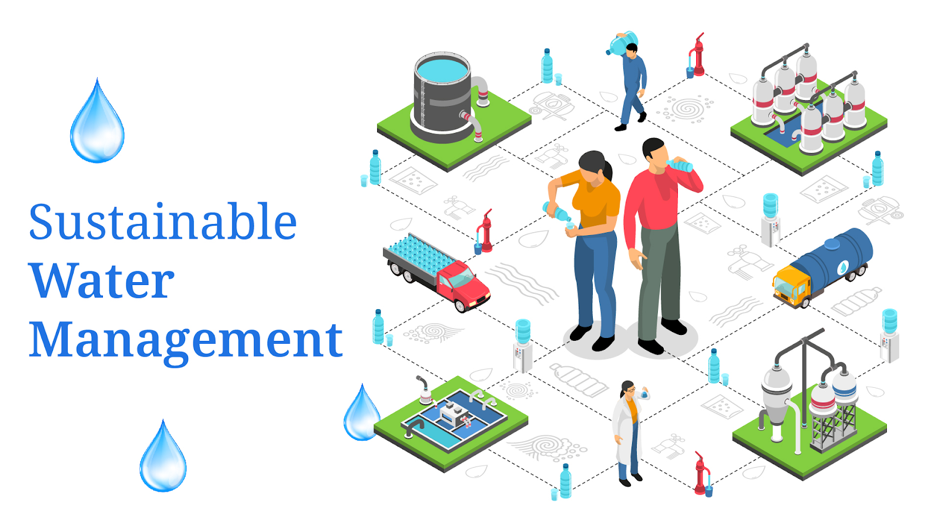
Across developed and developing countries, there’s a growing toolbox of effective strategies that have proven to make a difference when it comes to water resource management…
1. Integrated Water Resources Management (IWRM)
IWRM is all about breaking silos and planning water use across sectors (agriculture, domestic, industrial) with a shared framework. It’s like catchment-based strategies where every stakeholder has a say.
2. Rainwater Harvesting
Rainwater harvesting is one of the oldest techniques around for water resources management and is still incredibly effective when done right. Urban policies now mandate rooftop collection systems, while rural communities use contour trenches and percolation tanks.
3. Managed Aquifer Recharge (MAR)
To tackle groundwater depletion, MAR projects actively push rainwater or treated water back into aquifers. Some Indian states have even mapped zones specifically for recharge interventions.
4. Smart Irrigation Systems
Instead of flooding fields for growing crops, smart irrigation systems use soil moisture sensors and timers to deliver water precisely when and where it’s needed. And by implementing this strategy, you can save up to 30-40% of the water used in agriculture.
5. Wastewater Recycling
There was a time when greywater reuse was limited to large industries, but that’s not the case anymore. Housing societies and institutions are increasingly repurposing treated water for landscaping or flushing, cutting their freshwater dependency drastically.
6. Watershed Protection
When you create forests, wetlands, and grasslands upstream, they aren’t just about pretty landscapes; they also help in regulating downstream water flows and preventing erosion. Programs and projects that invest in these zones often reap long-term benefits.
7. Public-Private Partnerships (PPP)
Lastly, from financing treatment plants to managing municipal distribution systems, PPPs help bring operational efficiency, innovation, and accountability, especially where public capacity is limited.
MMCPL has embedded many of these practices across projects. For instance, in one of our most successful water supply management projects, watershed planning and community engagement helped reduce non-revenue water losses while improving storage design.
Top Technologies Transforming Water Resource Management
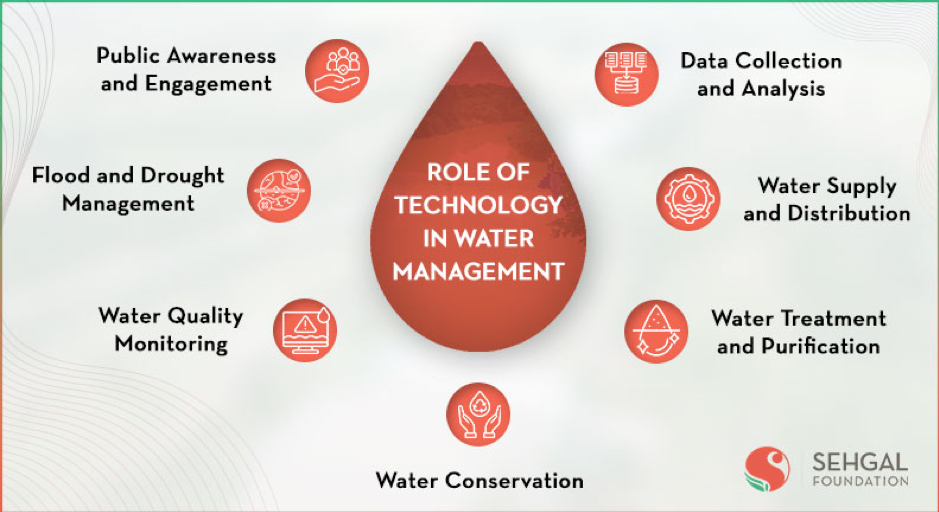
Now that you know which best practices work best in managing water resources, you also need to implement the technologies that facilitate those methods.
1. IoT-Based Leak Detection and Metering
A simple example of this technology is smart meters installed in large properties that detect leaks in real time. This not only saves water but prevents property damage and service loss.
2. GIS Mapping for Watershed and Flood Management
Geospatial tools help planners see the big picture. Using GIS, we can map erosion zones, simulate flood risks, or identify new recharge areas. At MMCPL, we fully integrate such insights into irrigation planning in water conservation and rerouting projects.
3. Remote Sensing for Monitoring Reservoirs and Basins
Did you know that satellites can now provide temperature, moisture, and vegetation data that help manage entire river basins? This data proves crucial for farmers and rural communities during monsoon fluctuations or droughts.
4. AI-Based Demand Forecasting
Algorithms can now predict demand spikes based on weather, consumption history, or even local festivals. Utility companies are increasingly using AI to optimize supply cycles and avoid shortages.
Key Challenges in Water Resource Management
Of course, the road isn’t smooth when it comes to water resource management. The more you work on water systems, the more you realise that obstacles aren’t just technical, they’re often systemic.
Over-extraction and groundwater depletion: Many Indian districts are classified as overexploited zones. Borewells go deeper, pumping more, without recharge plans in place.
Pollution from untreated wastewater: Urban centres still discharge large volumes of sewage into rivers and lakes. Industrial zones, especially informal ones, often bypass environmental regulations altogether.
Weak governance & fragmentation: Water tends to fall under multiple departments like rural development, urban local bodies, and irrigation boards, and each has its own mandate. And a lack of coordination (which is a given) amongst these departments makes it even complex.
Financial and technical barriers in rural areas: Basic monitoring equipment, trained personnel, or even reliable electricity supply is missing in many villages of India. So even if water schemes are funded by the government, implementation suffers right from the start.
Climate volatility: Volatility in climate and weather is more common than ever before. Seasons are no longer predictable, and reservoirs that once held water for six months now run dry in three.
None of these are abstract or uncommon problems. All of them show up in delayed projects, ballooning costs, and eroded public trust.
At MMCPL, we take them seriously, wholly incorporating them into pilot models that demonstrate actual value before scaling.
MMCPL’s Approach to the Future of Water Resources
We believe the future lies in water resource management strategies that combine local wisdom with global tech. That’s why our teams don’t just deliver designs, they work with environmental scientists, community leaders, and tech experts to co-create solutions. In every engagement, we ask:
- Will this solution be sustainable 10 or 20 years from now?
- Are we optimising based on real field data, not just projections?
- Can local teams maintain and monitor this without constant external support?
Whether it’s a smart irrigation plan for a semi-arid region or part of an integrated urban-rural development strategy, we apply the same principle: solve today’s problem without creating tomorrow’s crisis.
And if there’s one thing we’ve learned, it’s this: managing water isn’t just a technical task. It’s a shared responsibility that starts with smart planning, continues through rigorous execution, and never truly ends. Because water is dynamic. So, management has to be, too.
At MMCPL, we’re ready to partner with governments, utilities, NGOs, and community groups who believe in long-term, resilient water solutions.
Let’s move beyond reactive fixes. Let’s build systems that anticipate, adapt, and empower. Because if we get water right, we get almost everything else right.
